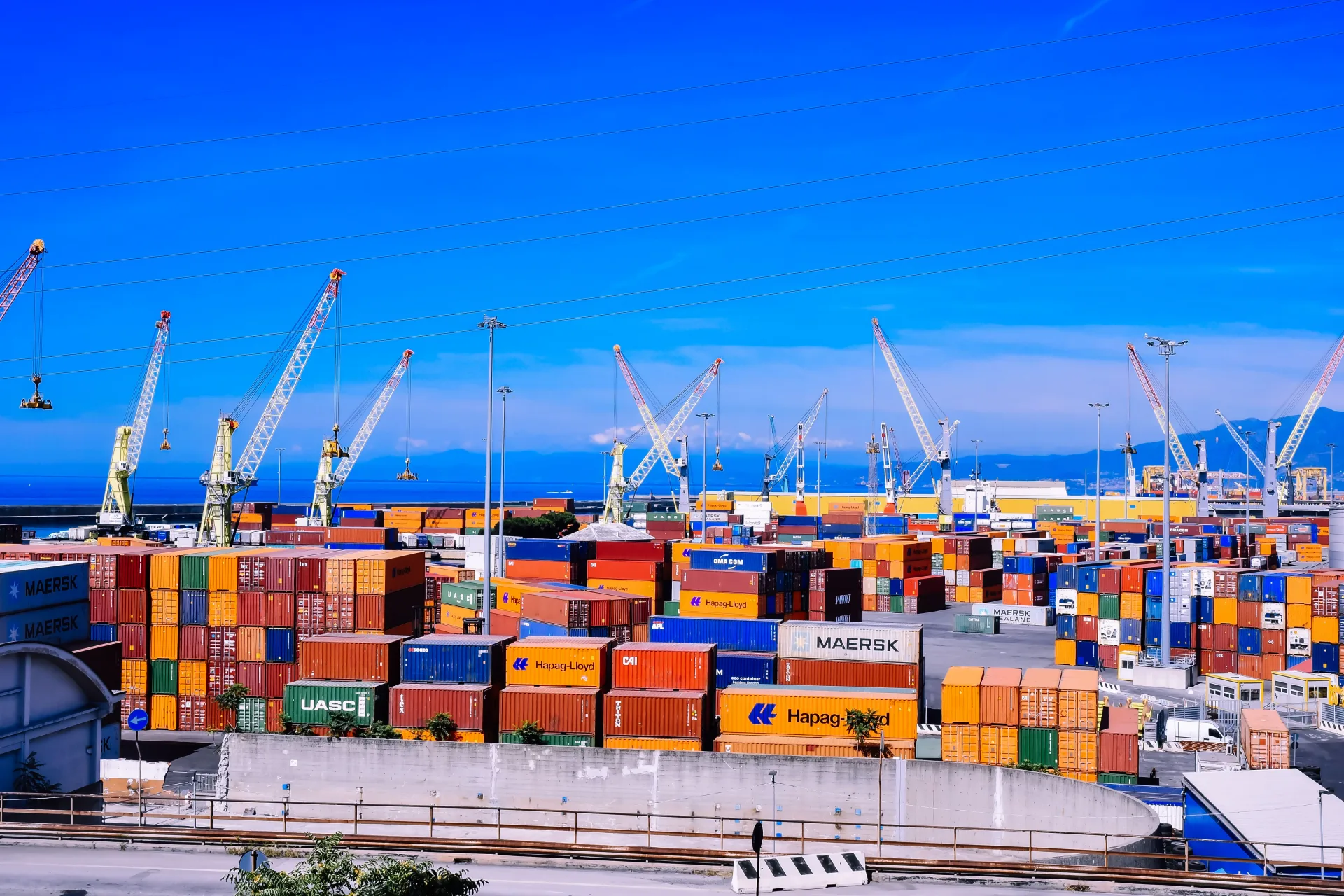
Shipping from Thailand to USA: Ocean and Air Freight, Transit Times, Costs and Tariffs

Shipping from Thailand to USA moves commercial cargo from a factory in Chonburi, Rayong or the Bangkok belt through Laem Chabang, Bangkok Port or Suvarnabhumi Airport to a US warehouse, distribution center or Amazon fulfillment facility. The lane carries computers and electronics, rubber and tires, automotive parts, air conditioners, furniture and seafood, and US-bound container volume out of Thailand rose 26 percent year on year in June 2026 as importers spread sourcing across Southeast Asia. Platton runs the ocean space, the air booking, the entry and the delivery as separate import services on this lane, the same way it does across shipping from Asia to the USA.

Get a Quote

What Platton Handles on the Thailand Lane

Most Thai bookings reach Platton as a single leg: ocean space for tires out of Rayong before peak season, the entry on a furniture container already three weeks out of Laem Chabang, a computer parts restock that has to fly before a retail date. Each is quoted on its own.

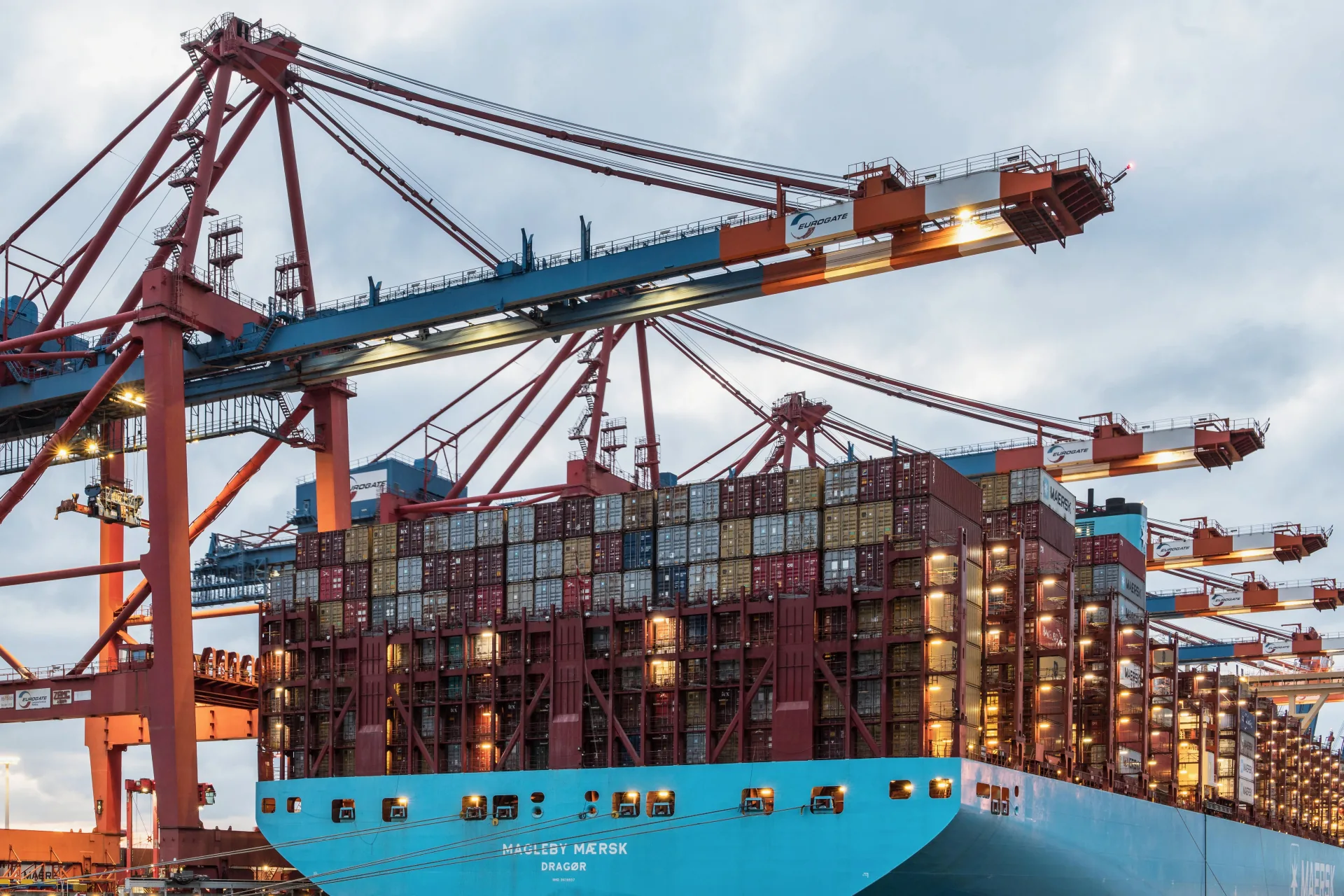
Container vessel at a terminal beneath cargo cranes

Ocean Space out of Laem Chabang and Bangkok

Ocean freight as FCL or LCL from Laem Chabang and Bangkok Port into Los Angeles, Long Beach, Seattle, Tacoma, New York, Savannah and Houston. Platton books the Thai strings as an import freight forwarder and WCA and JCtrans network member, with allocations agreed with carriers before the June to October peak, and there is no minimum to qualify: one container a year books on the same terms as one a week. US offices in Seattle, Portland, Chicago and Savannah cover the discharge side.

Suvarnabhumi Air Cargo Through the Regional Hubs

Air freight from Bangkok to LAX, ORD, JFK and DFW on standard or express service. No freighter flies nonstop from Thailand to the US, so every booking connects through Hong Kong, Taipei, Seoul or Tokyo; Platton picks the hub with the earliest onward uplift for the day the cargo is ready.

Entry Preparation and AD/CVD Screening on Thai Goods

The ISF goes in before the vessel loads at Laem Chabang, the entry is prepared before arrival, and the commodity is screened against the antidumping and countervailing duty orders that touch Thai goods, because tires, solar cells, shrimp and steel pipe from Thailand all sit under active orders. The HTS review and the estimated duty are on the quote; the classification decision stays with you under CBP's reasonable care standard, and our customs clearance page walks through the filing sequence.

Drayage at the US Port and Delivery to Warehouse or FBA

Drayage at the discharge port with the pickup slotted to the vessel's arrival, so the box gates out inside free time, then trucking onward to the warehouse, the 3PL or the Amazon dock. Tracking runs across each booked leg, and when a rotation change at Singapore rolls the container to the next vessel, the new ETA reaches your team the same day.

Ocean Freight from Thailand to the USA

Ocean freight from Thailand to USA is the economical mode for anything above roughly two cubic meters. Cargo loads at Laem Chabang or Bangkok Port and discharges at Los Angeles, Long Beach, Seattle, Tacoma, New York, Savannah or Houston in 19 to 42 days depending on the port pair and whether the service calls direct or transships.

FCL from Laem Chabang

A full container is the default once an order passes roughly 13 to 15 cubic meters. The box is sealed at the Thai factory or the origin terminal and stays sealed until it gates in at your US warehouse. A 40ft from Laem Chabang to Los Angeles typically runs $3,000 to $5,800 in ocean charges; to the East Coast via Panama, $3,800 to $6,800.

LCL Consolidation for Smaller Thai Orders

Less than Container Load fits Thai shipments between one and about 13 cubic meters: a first order of furniture, a pallet run of auto parts, a rubber compound sample lot. Cargo consolidates at the Laem Chabang or Bangkok Container Freight Station, sails in a shared box and deconsolidates at a US CFS before palletized delivery. LCL adds five to seven days to the FCL transit, and the CFS handling fees show on the quote instead of on the invoice. The breakeven between a shared container and your own is worked through in our FCL and LCL comparison.

Laem Chabang

Laem Chabang in Chonburi Province, about 130 km southeast of Bangkok, handled about 8.7 million TEU in 2023, the large majority of Thailand's container traffic, and every deep-sea US service on the lane. It is the origin for the Eastern Economic Corridor factories in Chonburi and Rayong and for anything trucked down from the Bangkok belt, and it is the Thai port with the direct transpacific calls that the fastest West Coast transits depend on.

Bangkok Port (Khlong Toei)

Bangkok Port sits on the Chao Phraya River inside the city and takes smaller vessels than Laem Chabang, so US-bound cargo loaded there either feeders to Laem Chabang or rides a smaller ship to Singapore for transshipment. Either way it adds three to five days. It suits factories inside Bangkok that would otherwise pay for a two-hour truck to Chonburi.

Transshipment via Singapore and Port Klang

Direct loops such as the Ocean Alliance SEA2 call Laem Chabang and then Yantian on the way to Los Angeles and Long Beach; the rest of the Thai strings rotate through Singapore or Port Klang before the transpacific leg. Transshipment adds four to seven days and one more terminal handling, and it changes nothing about the origin: goods produced in Thailand stay Thai origin at CBP regardless of where the container changed ships, provided the certificate of origin from the Thai Chamber of Commerce and the commercial invoice say so consistently.

Air Freight from Thailand to the USA

Air freight from Thailand to USA lands in six to ten days from pickup to delivery on standard service and three to five on express. It carries computer and telecom components, automotive parts against a line-down, cosmetics, fresh and frozen seafood, and any order that has missed the ocean cutoff before a retail date.

Standard Air via Hong Kong, Taipei, Seoul or Tokyo

Standard air cargo from Bangkok runs $4 to $9 per chargeable kilogram with breaks at 100, 300, 500 and 1,000 kg, and always connects through a regional hub, three to six days airport to airport. The connection is why a Thai air shipment lands a day later than the same cargo out of Shanghai: the flight to the hub, the transfer, the onward uplift.

Express Air for Restocks and Launches

Express compresses the hub connection to the next available uplift and delivers in three to five days at $7 to $14 per kilogram. It fits an Amazon restock before a stockout, a component shipment against a production line, and any Q4 order that cannot make the Laem Chabang cutoff.

BKK to LAX, ORD, JFK and DFW

Suvarnabhumi (BKK) handles most of Thailand's air cargo; Don Mueang (DMK) takes some regional freighters. On the US side Platton lands Thai cargo at Los Angeles, Chicago, New York and Dallas, chosen from the delivery address backwards. Pricing runs on chargeable weight, whichever is higher of scale weight and volume weight at the 6,000 divisor, so a pallet of air conditioner housings bills on volume while a pallet of tires bills on the scale.

Door to Door Shipping from Thailand to the USA

For importers who would rather hand over the Thai side and the US side together, Platton quotes the pickup in Chonburi or Bangkok, the export declaration, the sailing or flight, the entry and the truck to the warehouse as a single booking with a single tracking number. How that combined booking is priced and run is on its own service page.

Factory Pickup and the Thai Export Declaration

Platton coordinates the pickup at the supplier, the empty container positioning and the truck to Laem Chabang or Bangkok Port. The export declaration is filed through Thai Customs' e-Customs system on the commercial invoice and packing list data, the certificate of origin is obtained from the Thai Chamber of Commerce, and rubber, wood and food products carry the phytosanitary certificate from Thailand's plant protection authority before the container gates in.

US Entry and Delivery to Your Warehouse or Amazon FBA

The ISF is filed at least 24 hours before loading, the entry is prepared against the confirmed HTS codes before arrival, and duty, the Section 301 line, MPF and HMF are paid before release. Drayage collects the container inside free time and delivers to the dock, the 3PL or the Amazon FC on the booked slot, with the FBA shipment ID on the bill of lading.

Thailand to USA Transit Times by Port Pair

Transit on the Thailand lane depends on the origin port, the US gateway and whether the string calls direct from Laem Chabang or rotates through Singapore. The ranges below are port to port and include normal congestion; the June to October peak can stretch them by three to seven days.

Ocean transit, Thailand to US port pairs

Origin portUS destinationTransit time (days)
Laem Chabang, direct serviceLos Angeles / Long Beach19 to 24
Laem Chabang, via SingaporeLos Angeles / Long Beach24 to 30
Laem ChabangSeattle / Tacoma21 to 26
Laem ChabangNew York / New Jersey (via Panama)30 to 38
Laem ChabangSavannah32 to 40
Laem ChabangHouston34 to 42
Bangkok Port (Khlong Toei)Los Angeles / Long Beach24 to 30
Bangkok Port (Khlong Toei)New York / New Jersey34 to 42

Suvarnabhumi to US Gateways by Air

Air transit, Bangkok to the US

TierAirport to airportTo your dock
Express2 to 3 days3 to 5 days
Standard3 to 6 days6 to 10 days
Deferred6 to 8 days9 to 12 days

Every tier includes the hub connection. Add one to three days for the US entry and the airport delivery when the cargo continues to Chicago, Dallas or the Northeast by truck.

Songkran, Peak Season and the Thai Calendar

Songkran, the Thai New Year on April 13 to 15, puts factories, Thai Customs and the port administrations on skeleton staffing for five to seven working days once the surrounding holidays are counted, and cargo that reaches Laem Chabang the week before it sits until the backlog clears, often seven to fourteen days. Plan a Thai departure before April 10 or after April 20. The ocean peak runs June through October with the sharpest space pressure in August and September.

What Shipping from Thailand to USA Costs

Shipping from Thailand to USA cost is the freight, the US customs and duty, and the inland delivery added together. A 40ft FCL from Laem Chabang to Los Angeles typically lands between $3,000 and $5,800 in ocean charges, with the full landed figure at $4,800 to $9,500 depending on the duty rate of the commodity and the last-mile distance.

Freight containers and cargo cranes at a seaport

FCL and LCL Costs from Laem Chabang

FCL pricing runs $3,000 to $5,800 for a 40ft to the West Coast and $3,800 to $6,800 to the East Coast via Panama. LCL prices at $40 to $80 per cubic meter on the consolidated strings, with CFS handling, the ISF and the chassis fee shown at line level.

By equipment type, this is where current estimated spot levels sit in the middle of peak season; outside the June to October window they fall back toward the bands above. Ocean leg only, before duty and destination charges.

Estimated ocean spot ranges, Thailand to the US West Coast

EquipmentEstimated range
20ft standard (20SD)$4,400 to $5,400
40ft standard (40SD)$5,800 to $6,900
40ft high cube (40HQ)$5,900 to $7,000
40ft reefer (40RF)$12,800 to $15,800
20ft reefer (20RF)$9,700 to $11,800
Flat rack$8,800 to $13,800, set by cargo dimensions

The weekly movement on the transpacific, with the sources listed in every issue, is tracked in the Platton Import Index.

Air Freight Cost per Kilogram from Bangkok

Standard air from BKK to the US gateways runs $4 to $9 per chargeable kilogram across the weight breaks at 100, 300, 500 and 1,000 kg, with the common 100 to 1,000 kg bands at $4.50 to $7.50 for general cargo and $7.50 to $10.50 temperature controlled. Express runs $7 to $14. The hub transfer is inside the quoted rate, and it is the reason a Bangkok kilo prices above a Shanghai kilo on the same day.

Estimated air rates, Thailand to the USA

CargoEstimated rate per kg
Standard general cargo$4.50 to $7.50
Temperature controlled (reefer)$7.50 to $10.50

Duties, MPF and the 12.5% Section 301 Line

US import duty on Thai goods is set by the HTS classification, from zero to over 20 percent, with most consumer goods between 0 and 10 percent. Since July 24, 2026, the Section 301 forced-labor action adds 12.5 percent on Thai-origin goods across the board. Antidumping and countervailing duties on tires, solar cells, shrimp and steel pipe come on top where the order applies and are flagged at quote stage. MPF at 0.3464 percent, with a $32.71 minimum and a $634.62 cap per entry, and HMF at 0.125 percent on ocean cargo apply to every shipment. The quote itemizes the lines: origin charges, ocean or air freight, destination charges, the entry, duty and the inland leg.

What a Thai Shipment Costs Landed

The landed cost is the figure that reaches your books, not the freight line on the quote. It stacks the supplier price on FOB or EXW terms, origin handling, the ocean or air freight, US destination charges, the entry, duty plus the 12.5 percent Section 301 line plus MPF and HMF, drayage, transload if any, last-mile delivery and cargo insurance. Platton models the full number against your commodity, port pair and AD/CVD exposure before the booking; the method is in our landed cost guide.

Thai Import Tariffs and Origin Checks in 2026

Tariffs on Thailand to USA imports changed three times between February and July 2026, and none of the pages ranking for this lane reflect it. The stack today: the HTS duty, a 12.5 percent Section 301 forced-labor line, AD/CVD orders on specific Thai products, Section 232 on metal articles, and origin scrutiny on Thai goods with Chinese inputs.

The 2026 Section 301 Forced-Labor Tariff on Thailand

The Section 301 action of July 24, 2026 covers 60 trading partners at 10 or 12.5 percent depending on their forced-labor commitments, and Thailand sits in the 12.5 percent bracket. The IEEPA reciprocal tariffs that applied to Thai goods before that were struck down by the Supreme Court on February 20, 2026 and are no longer collected. The China-specific Section 301 lists at 7.5 to 25 percent do not apply to Thai-origin goods. The forced-labor action is under challenge at the Court of International Trade; importers on the lane are keeping entry summaries filed in case the case ends in refunds.

AD/CVD Orders on Thai Solar, Tires, Shrimp and Steel Pipe

Active orders cover crystalline silicon solar cells and modules from Thailand (orders in force since June 2025), truck and bus tires (December 2024), passenger and light truck tires, frozen warmwater shrimp and circular welded steel pipe, with welded stainless pressure pipe continued in 2025. The rate depends on the Thai exporter: some named producers carry a zero margin in the latest review while the all-others rate on solar is punitive. Platton checks the supplier against the order before the purchase order is confirmed, because the cash deposit is due at entry and cannot be argued afterward.

Origin Scrutiny on Thai Goods with Chinese Inputs

The White House transshipment report of August 13, 2026 placed Thailand in its second tier of countries watched for Chinese goods relabeled on the way to the US, and CBP is screening Thai electronics, wood furniture, auto parts, machinery and solar modules for their Chinese component share before entry. The test is substantial transformation: a product assembled in Rayong from Chinese boards is Thai origin only if the Thai processing changed its name, character and use. Thai authorities have tightened their own certificate of origin issuance in response. Get the HTS code and the origin analysis onto the file before the first shipment, not after the first CBP request for information.

GSP and Duty-Free Claims

The Generalized System of Preferences that once gave many Thai products duty-free entry expired on December 31, 2020 and has not been renewed, so there is no Form A claim to make. Thai goods pay the full HTS rate plus the 12.5 percent line, and the only way to lower the figure is a correct classification and, where the order allows it, a supplier-specific AD/CVD rate.

How a Thailand to USA Shipment Runs

  1. Step 1. The supplier finishes production in Chonburi, Rayong or the Bangkok belt and the cargo passes inspection.

  2. Step 2. Platton collects the cargo and delivers it to Laem Chabang, Bangkok Port or Suvarnabhumi.

  3. Step 3. Thai Customs clears the export through e-Customs with the commercial invoice, packing list, certificate of origin and any phytosanitary certificate.

  4. Step 4. The cargo sails, 19 to 42 days depending on the port pair, or flies, 6 to 10 days from pickup to delivery.

  5. Step 5. The ISF is filed 24 hours before loading and the entry is prepared before the US arrival, with the 12.5 percent Section 301 line and any AD/CVD deposit calculated.

  6. Step 6. CBP releases the cargo after duty, MPF, HMF and any AD/CVD deposit are paid.

  7. Step 7. Drayage pulls the container inside free time and the final-mile truck delivers to your dock, your 3PL or the Amazon FC on its booked appointment.

Thai Cargo into Amazon FBA

Amazon FBA shipping from Thailand moves supplier cargo into Amazon's US fulfillment network on appointment, with the customs, the drayage and the FC delivery quoted together. Thai origin is growing for home goods, kitchenware, furniture, pet products and packaged food, where FDA prior notice and facility registration ride alongside the entry. FNSKU labels, polybagging and carton labels can run at the Thai supplier or at a US FBA prep warehouse after release, and the truck reaches ONT8, LGB8, CHA1 or JFK8 inside the booked window with the shipment ID and PO on the bill of lading.

Common Questions About Shipping from Thailand to USA

Yes, two layers. Every Thai product pays its HTS duty rate, from zero to over 20 percent by classification, and since July 24, 2026 a 12.5 percent Section 301 forced-labor tariff applies on top. The IEEPA reciprocal tariff on Thailand was struck down in February 2026 and is no longer collected. Specific products such as tires, solar cells, shrimp and steel pipe carry antidumping or countervailing duties as well.

Get a Thailand to USA Quote Against a Named Sailing

Name the piece you need: one LCL lot out of Bangkok, a monthly FCL program from Laem Chabang into Savannah, or a container already discharged at Long Beach that needs the entry and a truck. Send the commodity, the volume and the delivery address, and the quote comes back against a named sailing or flight, with the 12.5 percent Section 301 line, any AD/CVD deposit and the destination charges itemized next to the freight.

Request a quote