Shipping from Malaysia to USA: Ocean Freight, Air Cargo, Transit Times and Costs

Shipping from Malaysia to USA carries semiconductors and server hardware out of Penang, electronics and appliances out of the Klang Valley, rubber gloves and medical devices for health and wellness importers, furniture from Johor and solar modules from the northern industrial parks, through Port Klang, Tanjung Pelepas, Penang Port or KLIA to a US warehouse or fulfillment center. US goods imports from Malaysia reached $59.5 billion in 2025, up 14 percent in a year, with electrical and electronic products about 60 percent of the total. Platton books the container space, the air uplift, the entry and the US delivery as separate import services on this lane, the same way it does across shipping from Asia to the USA.

Get a Quote

Import Services on the Malaysia Lane

Malaysian sourcing programs rarely arrive as one job. A rack of server components in Bayan Lepas has to be in a Texas data center in a week; a glove order is ready at a Klang factory with no July sailing confirmed; a furniture container is discharged at Savannah with no entry on file. Platton quotes each one as its own service.

Shipping containers and gantry cranes at a working container terminal

Container Space from Port Klang and Tanjung Pelepas

Ocean freight as FCL or LCL from Port Klang and Tanjung Pelepas into Los Angeles, Long Beach, Seattle, Tacoma, New York, Savannah and Houston, with allocations on the transpacific strings agreed before the June to October peak. No minimum applies: a first 20ft and a weekly 40HQ program book on the same terms. Platton runs the lane as an import freight forwarder and WCA and JCtrans network member, with US offices in Seattle, Portland, Chicago and Savannah on the discharge side.

Penang and KLIA Air Uplifts

Air freight from Penang and Kuala Lumpur to LAX, ORD, JFK and DFW. No freighter flies nonstop from Malaysia to the US, so the booking connects through Hong Kong, Taipei, Singapore or Seoul, and Platton picks the hub with the earliest confirmed onward uplift for the day the cargo is ready.

HTS Review and Entry Preparation for Malaysian Electronics

Malaysian cargo carries more tariff lines than most Asian origins: the HTS duty, a 10 percent Section 301 forced-labor line, a 25 percent Section 232 duty on certain semiconductor classifications since January 2026, and AD/CVD on solar cells. Platton reviews the codes with you, prices the estimated duty into the quote and prepares the entry before arrival; the classification decision stays with the importer under CBP's reasonable care standard. The filing sequence is on our customs clearance page, and the FCC and labeling side of importing electronics has its own guide.

US Port Pickup and the Truck to Your DC

Drayage at the discharge port with the pickup slotted to the vessel's arrival, then the linehaul to your DC, your 3PL or the Amazon appointment. High-value electronics ride with cargo insurance quoted on the invoice value, and tracking runs across each booked leg.

Malaysia to USA Ocean Freight

Ocean freight from Malaysia to USA loads at Port Klang, Tanjung Pelepas or Penang and discharges at the US West Coast in 16 to 26 days or the East Coast and Gulf in 30 to 42 days. Above roughly two cubic meters it is the economical mode for everything that is not on a deadline.

FCL out of Port Klang and Tanjung Pelepas

A full container is the default above 13 to 15 cubic meters, sealed at the factory or the origin terminal and opened at your US dock. A 40ft from Port Klang to Los Angeles typically runs $2,900 to $5,600 in ocean charges; to the East Coast via Panama or Suez, $3,700 to $6,600. Tanjung Pelepas gives the shortest West Coast transit because the main Asia to US strings call there direct.

LCL for Sub-Container Loads

Less than Container Load fits Malaysian shipments between one and about 13 cubic meters: a first glove order, a pallet lot of optical instruments, a furniture sample run. Cargo consolidates at the Port Klang or Tanjung Pelepas Container Freight Station and deconsolidates at a US CFS before palletized delivery, adding five to seven days to the FCL transit. Where the breakeven between a shared box and your own sits is in our FCL and LCL comparison.

Port Klang

Port Klang, split between Westports and Northport, is Malaysia's busiest container port and the gateway for the Klang Valley factories around Shah Alam, Klang and Kuala Lumpur. It has direct transpacific calls to Los Angeles and Long Beach and frequent connections to the East Coast strings, and it is the origin for most glove, appliance and consumer electronics cargo on the lane.

Tanjung Pelepas

Tanjung Pelepas in Johor, at the southern tip of the peninsula opposite Singapore, is one of Asia's largest transshipment hubs at about 15 million TEU of capacity and became the main Straits of Malacca hub for the Gemini network of Maersk and Hapag-Lloyd in 2026. That gives Johor furniture and electronics cargo direct services to the US West Coast and a one-hub connection to the East Coast, usually one to two days faster than Port Klang to the same US port.

Penang Port

Penang Port serves the semiconductor and electronics cluster in Bayan Lepas and Kulim, but the deep-sea transpacific services rarely call there. A US-bound container from Penang feeders to Port Klang or Tanjung Pelepas and adds three to four days, which is why time-sensitive Penang cargo usually flies and the rest goes by sea from Klang.

Air Cargo from Malaysia to the USA

Air cargo from Malaysia to USA lands in five to eight days from pickup to delivery on standard service and three to five on express, always through a regional hub. It carries integrated circuits, server and storage components, test equipment, medical devices and any electronics order that has missed the Port Klang cutoff before a customer date.

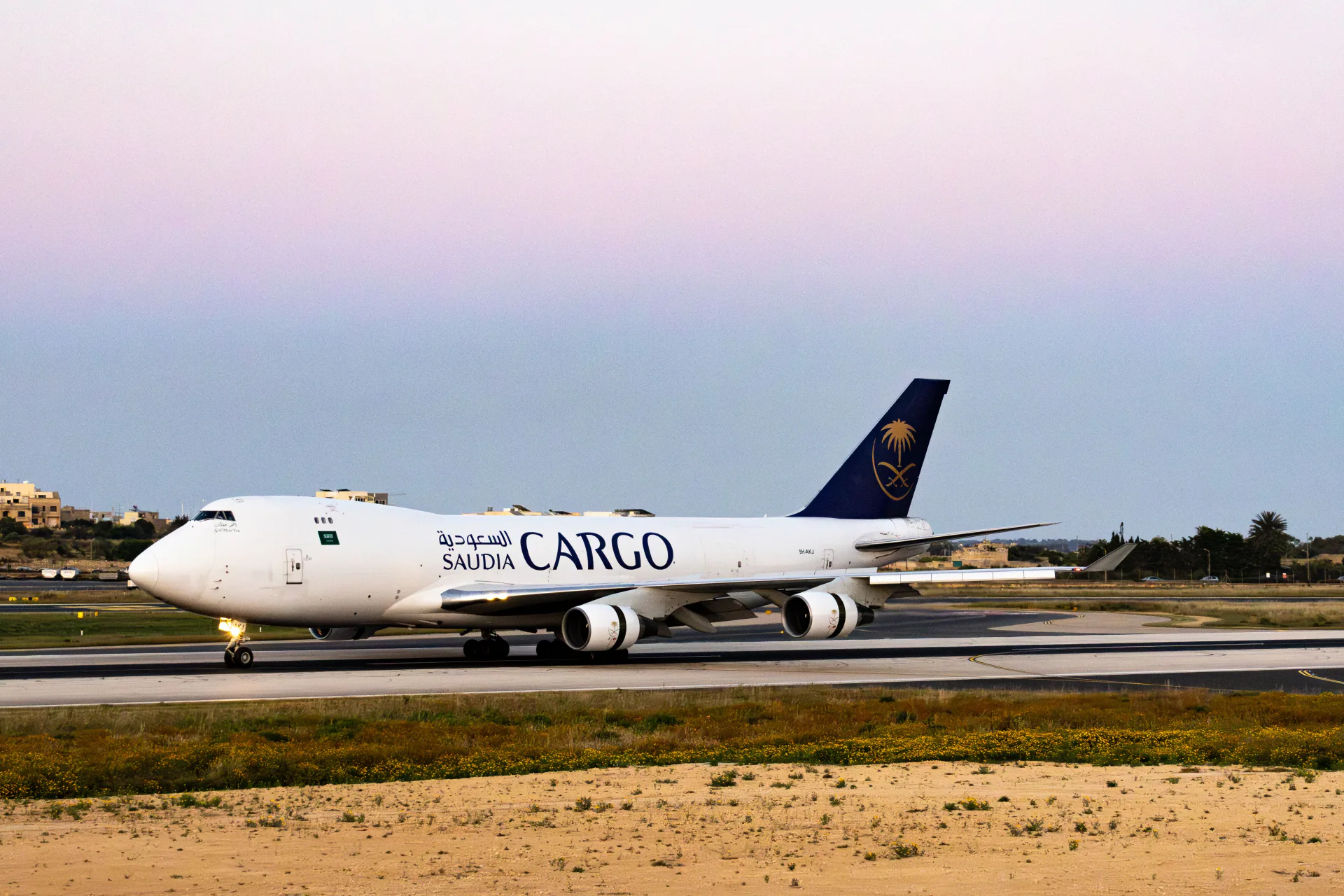
Saudia Cargo freighter taxiing on an airport runway

Penang: Seven of Every Ten Air Tonnes

Penang International Airport handles about 70 percent of Malaysia's air cargo, and about 70 percent of that is finished or semi-finished semiconductor product, which makes PEN the origin airport for chips, wafers and packaged devices bound for US assembly plants and data centers. The cargo terminal is being doubled under the Penang International Logistics Aeropark project, with the first phase due around 2029.

KLIA and the Hub Connections

Kuala Lumpur International Airport takes the rest of the lane's air cargo: appliances, e-commerce inventory, medical devices, industrial parts. Standard service from KUL or PEN runs two to five days airport to airport and five to eight from pickup to delivery, with the transfer at Hong Kong, Taipei, Singapore or Seoul adding about a day against a direct-flight origin.

Express Service for Semiconductor and Server Restocks

Express takes the next confirmed uplift out of the hub and lands in three to five days at $8 to $14 per kilogram. It fits a line-down component order, a data center build with a fixed install date and an Amazon restock before a stockout. Pricing runs on chargeable weight, volume weight at the 6,000 divisor or scale weight, whichever is higher, so dense semiconductor trays bill on the scale while server chassis bill on volume.

Door to Door Shipping from Malaysia to the USA

A Malaysian program can also be quoted as one booking from the Penang or Klang factory gate to the US dock: pickup, K2 declaration, ocean or air leg, entry, drayage and delivery under a single reference. Platton runs it that way for importers who ask, and the combined shipping service has its own page.

Supplier Pickup and the K2 Export Declaration

Platton coordinates the pickup at the supplier and the truck to Port Klang, Tanjung Pelepas, Penang or the airport. The K2 export declaration is filed through Royal Malaysian Customs from the invoice and packing list, the certificate of origin is issued through MITI's ePCO system or an authorized chamber, and regulated goods carry their MITI permit. Gloves and other medical devices need the supplier's FDA establishment registration and, for most glove products, a 510(k) on file before the US entry.

US Entry, Drayage and Final Delivery

ISF goes in 24 hours before loading, the entry is built on the confirmed HTS codes before the vessel docks, and duty, the Section 301 line, any Section 232 or AD/CVD deposit, MPF and HMF are paid before release. The container is pulled inside free time and delivered to your dock, your 3PL or the Amazon fulfillment center inside the booked window.

Port Klang, Tanjung Pelepas and Penang Transit Times

Transit on the Malaysia lane depends on which of the three ports the cargo loads at and whether the string calls direct or connects once at a hub. The ranges below are port to port and include normal congestion; the June to October peak can add three to seven days.

Ocean transit, Malaysia to US port pairs

Origin portUS destinationTransit time (days)
Tanjung Pelepas, direct serviceLos Angeles / Long Beach16 to 21
Port KlangLos Angeles / Long Beach17 to 22
Port Klang or Tanjung PelepasSeattle / Tacoma19 to 24
Port Klang or Tanjung PelepasNew York / New Jersey30 to 38
Port Klang or Tanjung PelepasSavannah32 to 40
Port Klang or Tanjung PelepasHouston34 to 42
Penang, via Port Klang or Tanjung PelepasLos Angeles / Long Beach20 to 26

KUL and PEN to US Gateways by Air

Air transit, Malaysia to the US

Service levelFlight leg and hubPickup to delivery
Express2 to 3 days3 to 5 days
Standard2 to 5 days5 to 8 days
Deferred5 to 7 days8 to 11 days

Every tier includes the hub connection. Add one to three days for the entry and the airport delivery when cargo continues to Texas, the Midwest or the Northeast by truck.

Monsoon, Hari Raya and Chinese New Year on the Schedule

Two monsoon seasons, May to September on the west coast and November to March on the east coast, slow trucking around the Klang Valley and Penang and occasionally push a vessel's berth window by a day. Hari Raya Aidilfitri and Chinese New Year each close factories for a week or more, and in 2026 the two fell within weeks of each other, which doubled customs and port turnaround times on the Malaysian side for most of February and March. Build a two-week buffer into any order that ships across either holiday.

Shipping Costs from Malaysia to the USA

Malaysia to USA shipping cost adds the freight, the US customs and duty stack, and the inland delivery. A 40ft FCL from Port Klang to Los Angeles typically lands between $2,900 and $5,600 in ocean charges, with the full landed figure at $4,600 to $9,300 depending on the duty and tariff lines on the commodity and the last-mile distance.

Stacked shipping containers with equipment markings

Container and LCL Pricing out of Port Klang

FCL pricing runs $2,900 to $5,600 for a 40ft to the West Coast and $3,700 to $6,600 to the East Coast. LCL prices at $40 to $80 per cubic meter on the consolidated strings, with CFS handling, the ISF and the chassis fee shown at line level.

By equipment type, this is where current estimated spot levels sit in the middle of peak season; outside the June to October window they fall back toward the bands above. Ocean leg only, before duty and destination charges.

Estimated ocean spot ranges, Malaysia to the US West Coast

EquipmentEstimated range
20ft standard (20SD)$4,300 to $5,300
40ft standard (40SD)$5,700 to $6,800
40ft high cube (40HQ)$5,800 to $6,900
40ft reefer (40RF)$12,600 to $15,600
20ft reefer (20RF)$9,600 to $11,600
Flat rack$8,600 to $13,600, set by cargo dimensions

The weekly movement on the transpacific, with the sources listed in every issue, is tracked in the Platton Import Index.

Air Cargo Cost per Kilogram from Penang and KLIA

Standard air from PEN or KUL to the US gateways runs $5.00 to $7.50 per chargeable kilogram for general cargo and $8.00 to $10.50 for temperature-controlled cargo, with rate breaks at 100, 300, 500 and 1,000 kg and the hub transfer included. Express runs $8 to $14.

Estimated air rates, Malaysia to the USA

CargoEstimated rate per kg
Standard general cargo$5.00 to $7.50
Temperature controlled (reefer)$8.00 to $10.50

Duty, MPF and the 10% Section 301 Line

US import duty on Malaysian goods follows the HTS classification, from zero to over 20 percent, with most electronics between 0 and 6 percent and most consumer goods between 0 and 10. Since July 24, 2026 the Section 301 forced-labor action adds 10 percent on Malaysian-origin goods, the lower of its two tiers. Certain semiconductor lines carry a 25 percent Section 232 duty, and solar cells and modules carry AD/CVD deposits, both flagged at quote stage. MPF at 0.3464 percent, with a $32.71 minimum and a $634.62 cap per entry, and HMF at 0.125 percent on ocean cargo apply to every shipment. The quote itemizes the lines: origin charges, ocean or air freight, destination charges, the entry, duty and the inland leg.

The Landed Figure on Malaysian Cargo

The landed cost stacks the supplier price on FOB or EXW terms, origin handling, the ocean or air freight, US destination charges, the entry, duty plus the 10 percent Section 301 line plus any 232 or AD/CVD deposit plus MPF and HMF, drayage, transload if any, last-mile delivery and cargo insurance. Platton models the full number against your commodity and port pair before the booking; the method is in our landed cost guide.

Tariffs on Malaysian Imports after the 2026 Rewrite

Tariffs on Malaysia to USA imports were rewritten twice in 2026. The 19 percent reciprocal rate agreed in October 2025 rested on IEEPA and disappeared when the Supreme Court struck those tariffs down on February 20, 2026; Malaysia's trade minister called the agreement null and void. What applies today: the HTS duty, a 10 percent Section 301 forced-labor line, Section 232 on semiconductors and metals, AD/CVD on solar, and origin scrutiny on goods with Chinese inputs.

Section 301 Forced-Labor Tariff at 10%

The Section 301 action of July 24, 2026 covers 60 trading partners at 10 or 12.5 percent, and Malaysia is one of seven partners credited with forced-labor commitments and placed in the 10 percent tier, against 12.5 percent for Thailand and Vietnam. The China-specific Section 301 lists at 7.5 to 25 percent do not apply to Malaysian-origin goods. The action is under challenge at the Court of International Trade, which makes a tidy entry file worth having if the ruling goes the importers' way.

Section 232 on Semiconductors, Steel and Aluminum

Since January 14, 2026 a first-phase 25 percent Section 232 duty applies to certain imported semiconductors and computer parts classified under HTS 8471.50, 8471.80 and 8473.30, and Malaysia is the second-largest source of US semiconductor imports at roughly $12 billion a year. Whether a given Malaysian chip or module falls under the duty depends on its exact ten-digit line, and country-level exemptions were still being negotiated as of September 2026, so the HTS code has to be confirmed before the price is set. Steel, aluminum and copper articles carry the general Section 232 rate, 25 percent on most covered goods and up to 50 percent on certain steel lines since June 2026.

AD/CVD on Malaysian Solar Cells and Modules

Countervailing duties on crystalline silicon photovoltaic cells and modules from Malaysia apply to entries since October 4, 2024 and antidumping duties since December 4, 2024, following the Commerce investigation that also covered Cambodia, Thailand and Vietnam. The deposit rate depends on the named Malaysian producer. Platton checks the supplier against the order before the purchase order is confirmed, because the deposit is due at entry and cannot be argued afterward.

Origin Scrutiny for Chinese Components Routed via Malaysia

The White House transshipment report of August 13, 2026 placed Malaysia in its second tier of countries watched for Chinese goods relabeled on the way to the US, and CBP screens Malaysian electronics, furniture and solar modules for their Chinese component share before entry. A product assembled in Johor from Chinese boards is Malaysian origin only if the Malaysian processing changed its name, character and use; the country of origin rules explain the test. On gloves and palm oil derivatives, check the supplier's CBP withhold release order history before the first order; a factory still under one cannot ship.

Step by Step: a Malaysia to USA Shipment

  1. Step 1. The supplier finishes production in the Klang Valley, Penang or Johor and the cargo passes inspection.

  2. Step 2. Platton collects the cargo and delivers it to Port Klang, Tanjung Pelepas, Penang Port, KLIA or PEN.

  3. Step 3. Royal Malaysian Customs clears the export on the K2 declaration with the commercial invoice, packing list and certificate of origin.

  4. Step 4. The cargo sails, 16 to 42 days depending on the port pair, or flies, 5 to 8 days from pickup to delivery.

  5. Step 5. The ISF is filed 24 hours before loading and the entry is prepared before the US arrival, with the 10 percent Section 301 line and any 232 or AD/CVD deposit calculated.

  6. Step 6. CBP releases the cargo after duty, MPF, HMF and any deposits are paid.

  7. Step 7. The container is pulled inside free time and trucked to the warehouse, the 3PL or the Amazon fulfillment center under the appointment on the booking.

Amazon FBA Shipping from Malaysia to the USA

Amazon FBA shipping from Malaysia moves supplier cargo into Amazon's US network with the entry, the drayage and the FC appointment priced on one quote. Malaysian origin is growing for gloves and personal care, small appliances, furniture and home goods, and for electronics accessories out of Penang. Labeling to Amazon's standard, FNSKU, polybag and carton, can run at the supplier or at a US FBA prep warehouse after release, and the truck arrives at ONT8, LGB8, CHA1 or JFK8 in its slot with the shipment ID and PO on the BOL.

Common Questions About Shipping from Malaysia to USA

No. Every air shipment from KUL or PEN transfers at Hong Kong, Taipei, Singapore or Seoul before the transpacific flight, which adds about a day and a transfer handling line against a direct-flight origin such as Shanghai. Standard service still lands in two to five days airport to airport and five to eight from pickup to delivery, and express in three to five, because Platton books the hub with the earliest confirmed onward uplift.

Quote a Malaysia to USA Shipment by Port Pair

Send the commodity, the volume and the delivery address for whichever piece you need: one LCL lot out of Port Klang, an express uplift from Penang into Dallas, a weekly 40HQ program from Tanjung Pelepas into Long Beach, or a container already sitting at Savannah that needs the entry and a truck. The quote comes back against a named sailing or flight, with the 10 percent Section 301 line, any 232 or AD/CVD deposit and the destination charges itemized next to the freight.

Request a quote