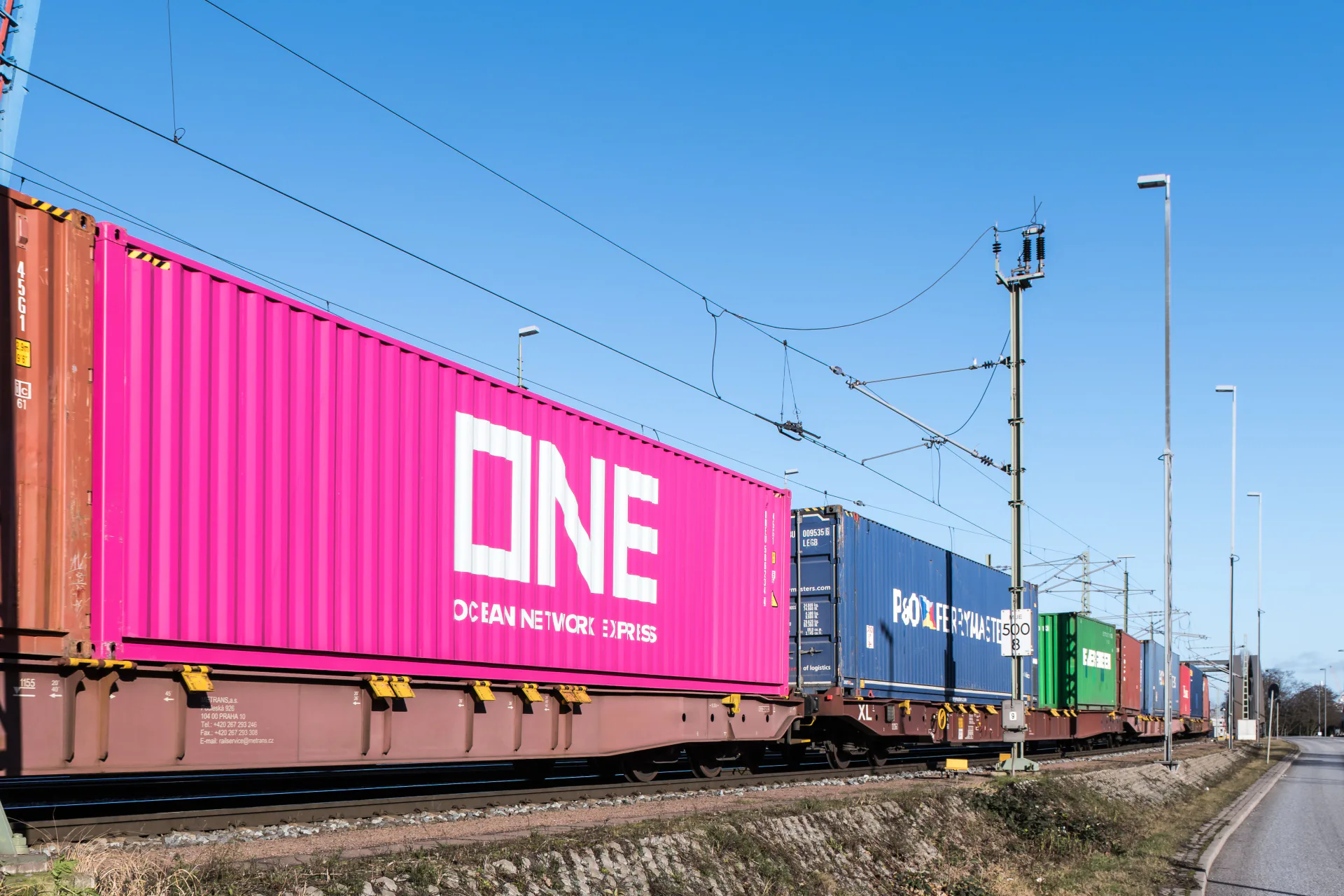
QUICK ANSWER The container types importers use daily are the 20ft standard (33.2 CBM nominal, up to about 28 CBM loaded), the 40ft standard (67.7 CBM), and the 40ft high cube (76.4 CBM, one foot taller). All are 8 feet wide externally. Special formats, reefer, open top, open side, flat rack, tank, and the 45ft high cube, exist for cargo the dry box cannot take.
Container types come down to one question: what space and weight does your cargo need, and which standard steel box matches it. The dimensions are fixed by the ISO 668 standard and identical worldwide, which is what makes the system work. This guide lists the real numbers, internal dimensions, door openings, usable capacity, and payload, plus the special formats and the US road-weight limit that trips up heavy cargo.
The three dry boxes importers actually book
Nearly all general cargo moves in three formats, and their working numbers matter more than their nameplates.
Standard dry containers, the numbers that matter
| 20ft standard | 40ft standard | 40ft high cube | |
|---|---|---|---|
| External size | 20 x 8 x 8ft 6in | 40 x 8 x 8ft 6in | 40 x 8 x 9ft 6in |
| Internal (L x W x H, m) | 5.90 x 2.35 x 2.39 | 12.03 x 2.35 x 2.39 | 12.03 x 2.35 x 2.69 |
| Door opening (W x H, m) | 2.34 x 2.28 | 2.34 x 2.28 | 2.34 x 2.58 |
| Nominal capacity | 33.2 CBM | 67.7 CBM | 76.4 CBM |
| Realistic loaded | 25 to 28 CBM | 54 to 58 CBM | 60 to 68 CBM |
| US pallets (48 x 40 in) | 10 to 11 | 20 to 21 | 20 to 21, taller stacks |
| Max payload (spec) | About 28,200 kg | About 26,700 kg | About 26,500 kg |
The gap between nominal and realistic capacity is loading geometry: cartons never tile the space perfectly, and door clearance costs the last row. The door opening matters more than importers expect, because a crate that fits the internal cube but not the 2.28 m door height is a crate that ships open top. Plan loads on the realistic column, and calculate your cargo's volume with the CBM guide before assuming which box it fits.
To check which container your cargo actually fills, run the list through the CBM calculator.
40ft standard vs 40ft high cube
The high cube is the same box with one extra foot of height, which buys 8.7 CBM of additional capacity on an identical footprint. On most lanes the ocean rate difference between the two is small or zero, so for volumetric cargo the high cube is the default call: same drayage, same slot, more space. The only reasons to book the standard 40ft are equipment availability and the rare destination with height restrictions. If your cargo is light and bulky, the question is not whether to take the HC, it is why you would not.
Special formats: reefer, tank, open top, flat rack
When the dry box does not fit the cargo, the specials do.
Special container formats and when they apply
| Format | What it is | Typical cargo |
|---|---|---|
| Reefer | Refrigerated, powered container | Food, pharma, temperature-sensitive goods |
| Open top | Removable tarpaulin roof | Machinery loaded by crane, over-height pieces |
| Open side | Full-length side doors | Long cargo, fast side loading and unloading |
| Flat rack | Floor and end walls only | Vehicles, oversized equipment, project cargo |
| Tank | Cylindrical tank in a frame | Liquids, chemicals, food-grade product |
| Half height | Low-profile open box | Dense bulk like stone, ore, heavy scrap |
| 45ft high cube | Five feet longer than a 40HC, about 86 CBM | High-volume, light cargo on supported lanes |
Specials cost more and run on thinner availability, so they are booked earlier than dry boxes, and cargo that merely might need one is worth re-measuring first: plenty of "over-height" machinery fits a high cube once the crate is redesigned.
Payload limits and the US road-weight catch
The container spec allows more weight than US roads do. A 20ft can legally carry about 28 tonnes at sea, but on a US highway the load rides a truck capped at 80,000 lb gross under federal law (FHWA). On standard chassis that works out to roughly 44,000 lb (about 20 tonnes) of cargo in a 40ft and roughly 38,000 lb (about 17 tonnes) in a 20ft, because the short 20ft chassis concentrates the weight on one tandem axle group. Dense cargo still books 20ft boxes, but for a different reason than importers assume: it hits the weight ceiling long before it fills a 40ft's cube, so the extra space would ship empty. A genuinely heavy order splits across two 20fts so each truck stays road-legal, or budgets a tri-axle chassis and an overweight permit on the drayage leg. Splitting costs a second container; it saves the permit, the special chassis, and the risk of a load stuck at the port scale.
TAKEAWAY Volume fills a 40ft before weight does; weight fills a 20ft before volume does. If an order weighs more than roughly 19 to 20 tonnes, plan a split across two 20ft boxes or budget a tri-axle chassis and permit, and weight-check before booking, because an overweight container discovered at the port is a re-work, a permit, or a transload, all of them expensive and none of them fast.
Matching the box to your order
The whole decision hangs on two numbers, your CBM and your weight. Under roughly 13 CBM, you are not booking a container at all, you are LCL freight. From the mid-teens to the high 20s in CBM, it is a 20ft. Past that, a 40ft, and if the cargo is light for its size, the high cube. Heavy loads stop being a volume question at all: they are planned around the road-weight limit, often as two 20fts. Cargo needing temperature, crane loading, side access, or open dimensions goes to the specials table above.
To see how many of your cartons or pallets fit each box, run the order through the container capacity calculator.
How Platton books container equipment
Equipment choice is part of the quote, not an afterthought at booking.
The box sized from measured cargo
Your confirmed CBM and weight pick the container on the FCL quote, so you are not paying for space you cannot use or discovering at origin that the load does not fit.
Overweight caught before it ships
Weight against US road limits is checked at booking, so a heavy load is planned into a split, a tri-axle chassis, or a permit from the start instead of stalling at the destination port.
High cube as the volumetric default
Where the lane prices 40ft and 40HC the same, we book the extra 8.7 CBM by default for light cargo.
Specials sourced with lead time
Reefer, open top, and flat rack equipment is requested against the sailing early, because special equipment is the one thing a last-minute booking cannot produce.
Get an FCL quote with the right container on it
Common Questions About Container Sizes
What size is a 20ft and a 40ft container?
A 20ft container is 20 x 8 x 8.5 ft externally with an internal space of 5.90 x 2.35 x 2.39 m and 33.2 CBM nominal capacity. A 40ft is 40 x 8 x 8.5 ft externally, 12.03 x 2.35 x 2.39 m internally, 67.7 CBM nominal. Realistically loaded, plan on up to about 28 CBM and 54 to 58 CBM respectively.
What is the difference between a 40ft and a 40ft HC container?
Height only. The high cube is 9.5 ft tall externally against 8.5 ft, giving 2.69 m of internal height instead of 2.39 m and 76.4 CBM instead of 67.7, with a taller door as well. Footprint, length, and width are identical, so it takes the same truck, chassis, and slot. Ocean pricing is usually close to identical, which makes the HC the standard choice for bulky, light cargo.
What is the maximum load for a 20ft and 40ft container?
By spec, roughly 28,200 kg of payload in a 20ft and 26,700 kg in a 40ft. On US roads the practical limit is lower: the 80,000 lb gross vehicle cap leaves roughly 44,000 lb (about 20 tonnes) of cargo in a 40ft and roughly 38,000 lb (about 17 tonnes) in a 20ft on standard chassis. That is why heavy orders get weight-checked at booking, and why genuinely dense cargo often splits across two 20ft boxes instead of riding one overweight truck.
Are all shipping containers 8 feet wide?
The standard ISO dry containers, 20ft, 40ft, and high cubes, are all 8 ft (2.44 m) wide externally with about 2.35 m usable inside, which is what lets two 48 x 40 in US pallets sit side by side. Specialized equipment can differ: flat racks carry over-width cargo beyond the frame, and pallet-wide containers on some European trades run slightly wider.
What are the main types of shipping containers?
The working list: standard dry containers in 20ft and 40ft, high cubes for extra height, reefers for temperature control, open tops for crane-loaded and over-height pieces, open-side boxes for long cargo, flat racks for oversized and project loads, tanks for liquids, and the 45ft high cube where lanes support it. General importers use the first three; the rest are special-purpose equipment booked case by case.
Related Ocean Freight Guides
Ocean freight knowledge hub: the starting point for the ocean guides.
What CBM is and how to calculate it: the volume number that picks your container.
FCL vs LCL: whether you need a whole box at all.

