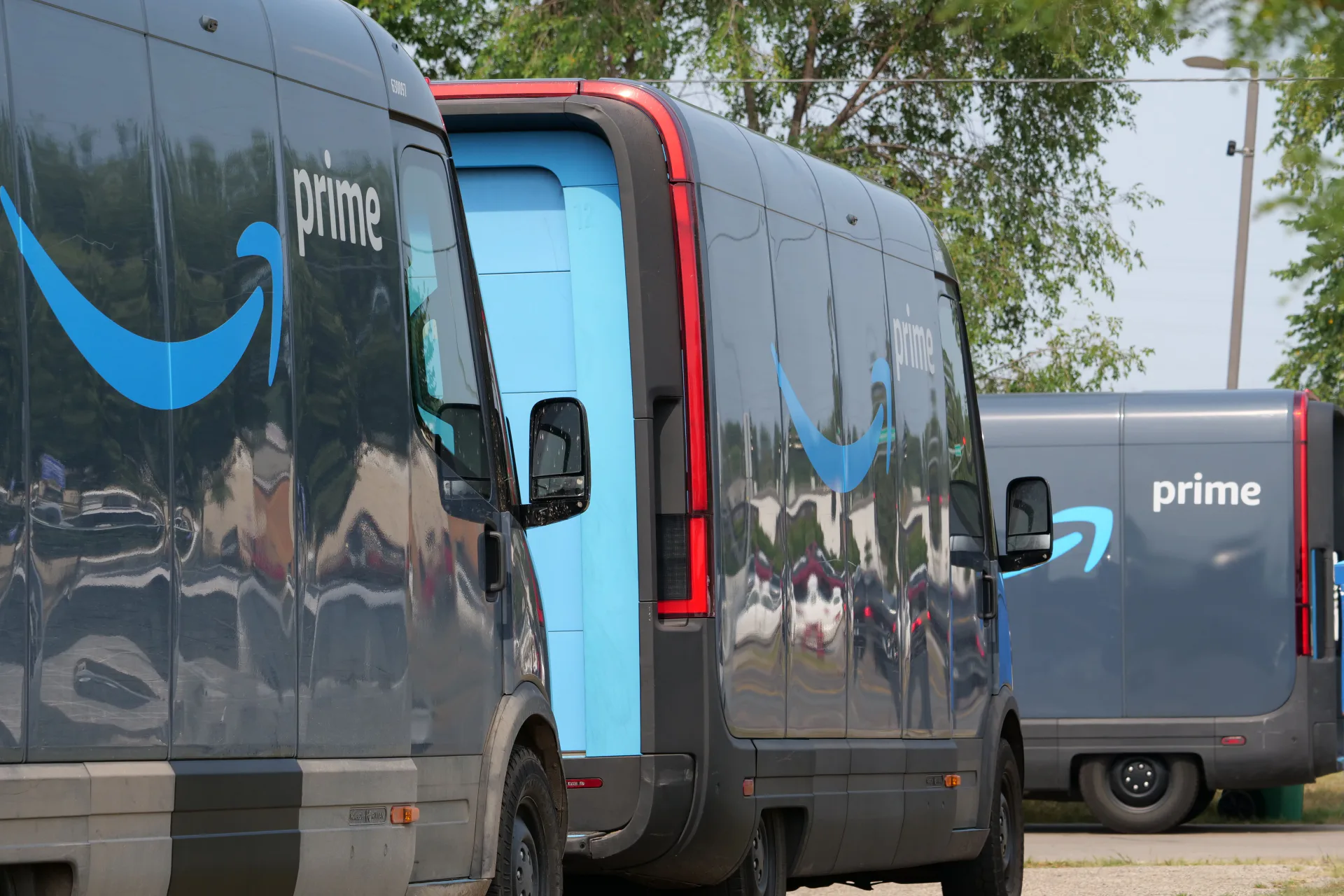
QUICK ANSWER FBA stands for Fulfillment by Amazon. You send inventory to Amazon's fulfillment centers, and Amazon stores it, packs it, ships it to the customer, handles returns and gives your listings the Prime badge, for a set of per-unit and storage fees. For an importer the definition is the easy half: FBA also turns Amazon's warehouse into your freight destination, which brings appointment rules, labeling specs, placement splits and a customs step that must be finished before Amazon touches the goods.
Search the FBA meaning and most answers are written for someone opening a seller account. This one is written for the person whose containers are already moving: what the service is, what it costs, and what changes between the port and the warehouse door once that warehouse belongs to Amazon.
What FBA stands for and how it works
Fulfillment by Amazon is Amazon's outsourced logistics service for sellers on its marketplace. You ship your products into Amazon's fulfillment network, and from that point Amazon runs the consumer side: storage, picking, packing, last-mile delivery, customer service and returns.
The commercial pull is the Prime badge. FBA listings ship with Prime delivery promises, and that badge moves conversion enough that most serious marketplace sellers treat FBA as the default rather than an option. The trade is control for reach: Amazon decides where your inventory sits, how it moves and what the handling costs, and you build your import chain to feed that machine.
What FBA costs, line by line
Amazon publishes its US fee schedule and updates it, usually at least yearly. The lines an importer budgets against:
Amazon's published FBA fee lines, US marketplace
| Fee line | What it charges | Published level for standard-size goods |
|---|---|---|
| Fulfillment fee | Per unit picked, packed and shipped | Roughly $3 to $6 per unit by size and weight tier |
| Monthly storage | Per cubic foot of inventory held | About $0.78 per cubic foot January to September, about $2.40 October to December |
| Inbound placement | Per unit, when you send to fewer locations than Amazon wants | Roughly $0.21 to $0.68 per unit, waived if you split shipments across regions |
| Aged inventory surcharge | Per unit stored beyond 181 days | Escalates with age, on top of monthly storage |
| Low-inventory-level fee | Per unit when stock runs below Amazon's threshold for your sales rate | Applies to consistently under-stocked SKUs |
Two of those lines are really freight-planning fees wearing a storage costume. The October to December storage rate tripling means inventory that lands in September and sells in January pays peak rent for a quarter. The aged surcharge and the low-inventory fee punish the two ends of the same mistake: shipping too much too early, or restocking too late. Both are decided at booking time, months before Amazon invoices them.
TAKEAWAY Amazon prices storage and age months in advance. The sailing you book in August decides whether that inventory pays September rent or December rent.
FBA or FBM, the decision in one table
The alternative is FBM, Fulfilled by Merchant: you keep the inventory and ship each order yourself or through a third-party warehouse.
FBA vs FBM for an importer
| Question | FBA | FBM |
|---|---|---|
| Who stores and ships | Amazon, from its fulfillment centers | You, from your own or a partner warehouse |
| Prime badge | Yes, by default | Only through Seller Fulfilled Prime, with strict performance gates |
| Fee structure | Per-unit fulfillment plus storage, placement and age fees | Warehouse and carrier costs you negotiate |
| Control over inventory | Amazon routes and moves it | Full control, including multichannel use |
| Freight implications | Inbound must meet Amazon spec, split across FCs, cleared before delivery | Deliver to one warehouse you choose, on your own schedule |
| Where it wins | Standard-size goods with steady velocity | Oversized items, thin margins, multichannel brands, seasonal spikes |
Plenty of importers run both: FBA for the fast movers, FBM through their own warehousing for the long tail and the oversized catalog. The freight plan follows the split, not the other way around.
What FBA changes about your import freight
A fulfillment center is not a normal delivery address, and the differences are where FBA shipments go wrong.
Amazon controls the inbound door. Deliveries book appointments through Amazon's systems, cartons and pallets have published specs (GMA 40 by 48 pallets, height caps, cartons kept under 50 pounds unless marked for team lift), every unit needs the right barcode, and freight that arrives out of spec gets refused or checked in late, with your inventory sitting unavailable either way. The prep work, FNSKU labels, poly bagging, carton weight limits, is a service of its own precisely because rejections cost sales rank, not just handling fees.
Amazon also decides where your inventory goes. An inbound plan can split one shipment across fulfillment centers in different states, and sending everything to one location instead is what the placement fee in the table above prices. Importers feel this as a routing question: one container becomes three or four domestic legs, or one delivery plus a fee.
And the customs step is yours alone. Amazon does not act as the importer of record for your goods and will not accept a shipment that has not cleared. Entry, duties and compliance are completed before delivery, in the importer's name, every time.
TAKEAWAY FBA moves fulfillment off your plate and moves its rules onto your freight. The importer who wins at FBA is the one whose shipments arrive cleared, labeled, in spec and split the way Amazon expects, because everything after the receiving dock is out of your hands.
Two routes from the port to the fulfillment center
An import bound for FBA takes one of two paths after the vessel arrives.
Direct fulfillment center delivery. The container is cleared, drayed and delivered straight into Amazon's network. It is the fastest and cheapest route, and it requires the goods to leave the factory already FBA-ready: labeled, poly bagged where needed, cartons in spec. Run well, it takes days off the timeline: when Platton switched Razor Group, a billion-dollar Amazon aggregator, to direct delivery, its stock went live on Amazon about two weeks sooner. The numbers are in the Razor Group case study.
Prep first, then forward. The container lands at a warehouse for FNSKU labeling, quality checks, repacking or splitting into Amazon's placement plan, then moves on to the fulfillment centers. Slower and with a handling stop, but it is the route that saves shipments whose factories cannot hold Amazon spec, and it doubles as a buffer when Amazon's storage fees make holding inventory outside the network cheaper than inside it.
How Platton helps with FBA freight
Platton is a digital freight forwarder for companies importing into the US, and FBA shipments are a core part of its e-commerce work on lanes from China, Vietnam and India.
FBA shipping from Asia to the fulfillment center
Amazon FBA shipping covers the inbound from factory to fulfillment center: ocean or air, customs, drayage and delivery into Amazon's network, direct where the cargo is ready and through prep where it is not. It is the same setup that produced the Razor Group numbers above.
Prep that passes receiving
Amazon FBA prep handles FNSKU labeling, poly bagging and carton compliance before the freight meets Amazon's dock, so receiving happens on the first attempt.
Restocks on the calendar, not in a panic
When a SKU sells faster than the ocean leg can feed it, an ocean-to-air restock keeps the listing live, and buyers consolidation lets several suppliers share one container so smaller replenishments still move at ocean rates.
Common Questions About FBA
What does FBA stand for and who is it for?
FBA stands for Fulfillment by Amazon: Amazon stores your inventory and handles delivery, returns and customer service for marketplace orders. It fits any seller who wants the Prime badge without running fulfillment, from a first shipment to a container program. The importers who benefit most sell standard-size goods with steady velocity, where the per-unit fees stay small next to the conversion the badge brings.
Does Amazon clear customs for FBA imports?
No. Amazon does not act as the importer of record for your goods, and a fulfillment center will not receive freight that has not cleared. Customs entry, duties and any agency requirements are completed before delivery, in the importer's name. Plan the clearance step into the timeline the same way you plan the ocean leg, because an FC appointment is worthless while the cargo is still with CBP.
Can a container from China go straight to an Amazon fulfillment center?
Yes, if the goods leave the factory FBA-ready: FNSKU labeled, poly bagged where required, cartons within Amazon's spec, and the inbound plan booked. Cleared at the port, the container delivers into Amazon's network without an intermediate warehouse stop. If any of those conditions fail, the container routes through prep first, which costs a stop but protects the receiving appointment.
What is the difference between FBA and FBM for an importer?
With FBA, Amazon stores and ships your goods and your freight must meet Amazon's inbound rules; with FBM you fulfill orders from a warehouse you control and deliver inbound freight on your own terms. FBA usually wins on conversion for standard-size, steady sellers. FBM wins on oversized goods, multichannel inventory and anything where Amazon's storage math turns against you, and many importers deliberately run both.
Why does Amazon split my inbound shipment across several warehouses?
Amazon positions inventory close to the buyers it predicts, so an inbound plan often assigns one shipment to fulfillment centers in different regions. You can choose to send everything to fewer locations and pay the inbound placement fee instead, or split the freight and skip it. For an importer it is a genuine routing decision: several domestic legs against a per-unit fee, and the cheaper answer depends on the quantities and the lanes that month.
Related import guides
Amazon FBA shipping: the inbound service, from factory to fulfillment center.
Amazon FBA prep: FNSKU labels, poly bags and carton spec before the dock.
Ocean-to-air restock: keeping a listing live when the ocean leg is too slow.
Buyers consolidation: several suppliers, one container, one delivery plan.
Razor Group case study: direct fulfillment center delivery at scale.
Get an FBA-ready import quote
Send the SKU list, the origin and the inbound plan, and you get back an itemized quote: freight, clearance, prep where needed and delivery into Amazon's network, with the direct-versus-prep choice priced both ways.

