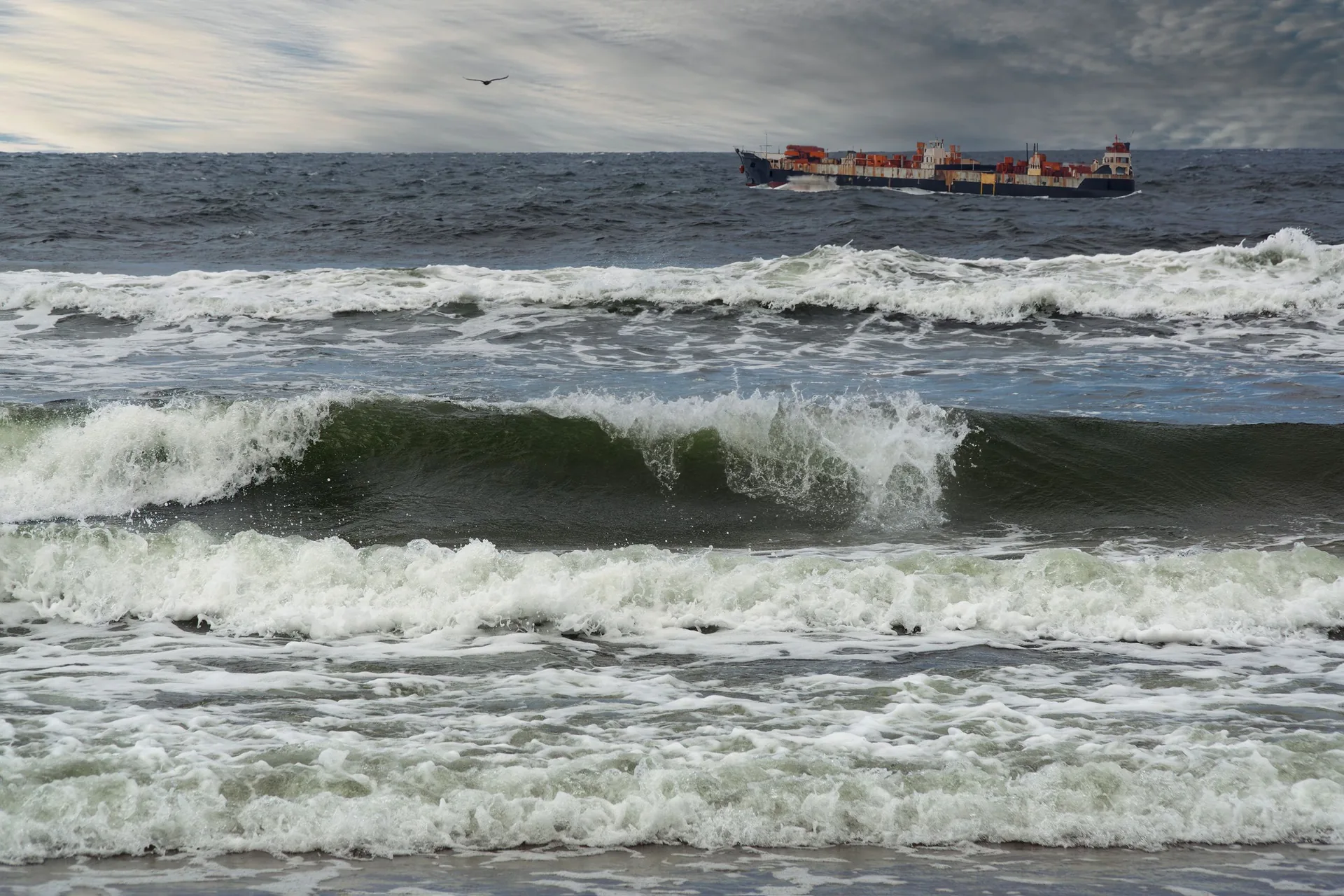
QUICK ANSWER All-risk cargo insurance pays for any accidental physical loss or damage that the policy does not exclude, while named perils cargo insurance pays only for the events written into it. In marine cargo, all-risk cover is the Institute Cargo Clauses (A), and named perils cover is ICC (B) or ICC (C). Under (A), you only have to show that the goods were lost or damaged by accident during transit, and the insurer then has to prove an exclusion to refuse the claim. Under (B) and (C), you have to prove that one of the listed events caused the loss. In practice, theft, rain, handling damage and cartons that go missing without explanation are covered under (A) and not under (B) or (C). ICC (C) is the shortest list, and it is the minimum cover a seller has to provide on a CIF sale.
Platton, an import-focused forwarder, works out the all-risk vs named perils cargo insurance choice with you while you book, so the cover is settled before your goods leave the supplier. Our standard cargo insurance is all-risk ICC (A); request a quote to see the rate and coverage terms before anything ships. We also tell you in plain terms what a narrower policy would leave you to carry. With our AI-driven platform behind every booking, you always know where your cargo is.
ICC (A), (B) and (C) side by side
Marine cargo policies are widely written on the Institute Cargo Clauses, the standard London market wordings, though some markets, the American one included, use their own cargo forms, so check which wording and edition your certificate names. ICC (A) is all-risk marine cargo insurance, and ICC (B) and ICC (C) are named perils cover. Six differences between them decide whether a claim is paid.
| Difference | ICC (A) | ICC (B) | ICC (C) |
|---|---|---|---|
| 1. What it pays for | All risks of physical loss or damage, minus the exclusions | The (C) named perils plus earthquake, volcanic eruption and lightning, washing overboard, sea, lake and river water, and packages lost while loading or unloading | Five named major casualties, plus general average sacrifice and jettison |
| 2. Who proves the cause | You show the loss was accidental; the insurer has to prove an exclusion | You prove that a named peril caused the loss | You prove that a named peril caused the loss |
| 3. Exclusions | The shared list in clauses 4 to 7; piracy and deliberate damage by others stay covered | The shared list, plus deliberate damage by others and piracy | Same as (B) |
| 4. Cargo it fits | Most finished goods, fragile or theft-prone cargo and LCL; higher premium | Sturdy cargo that needs more than the minimum, including cover for sea water and washing overboard; lower premium | Sturdy, low-value cargo insured against major casualties only; lower premium |
| 5. How long it lasts | Warehouse to warehouse, ending at the latest 60 days after discharge at the final port | Same as (A) | Same as (A) |
| 6. What you can add | War and strikes clauses | War and strikes clauses, plus theft and malicious damage clauses | War and strikes clauses, plus theft and malicious damage clauses |
Carrier liability sits outside all three levels. Under COGSA, an ocean carrier is liable for no more than $500 per package unless a higher value has been declared and paid for, as our guide to carrier liability under COGSA explains.
1. What each level pays for: all risks or a list of named perils
An all-risk policy names the losses it will not pay. A named perils policy names the only events it will pay for. The table goes event by event, following the cover comparison MSIG Insurance publishes for its cargo clients.
| Event or cost | ICC (A) | ICC (B) | ICC (C) |
|---|---|---|---|
| Fire or explosion | Yes | Yes | Yes |
| Vessel stranded, grounded, sunk or capsized | Yes | Yes | Yes |
| Truck or rail car overturned or derailed | Yes | Yes | Yes |
| Collision with another vessel | Yes | Yes | Yes |
| Contact with any external object other than water (ice included) | Yes | Yes | Yes |
| Cargo discharged at a port of distress | Yes | Yes | Yes |
| General average and salvage charges | Yes | Yes | Yes |
| Jettison | Yes | Yes | Yes |
| Reasonable costs of limiting a loss | Yes | Yes | Yes |
| Earthquake, volcanic eruption or lightning | Yes | Yes | No |
| Washing overboard (deck cargo) | Yes | Yes | No |
| Sea water entering the vessel, hold, container, vehicle or storage place | Yes | Yes | No |
| River or lake water entering the same | Yes | Yes | No |
| Package lost overboard while loading or unloading (total loss only) | Yes | Yes | No |
| Other loss or damage while loading onto or unloading from the vessel | Yes | No | No |
| Rain water | Yes | No | No |
| Theft, pilferage or robbery | Yes | No | No |
| Non-delivery of an entire package | Yes | No | No |
| Malicious damage | Yes | No | No |
| Piracy | Yes | No | No |
| Any other physical loss or damage that is not listed and not excluded | Yes | No | No |
Source: MSIG Insurance (Hong Kong), cover comparison between ICC (A), (B) and (C). MSIG's table is drawn up for the 1982 edition of the clauses. The named perils in (B) and (C) are the same in the 2009 edition, as Lloyd's confirms in its cargo claims manual.
ICC (A): all risks, with named exclusions
The current wording of ICC (A) is CL382, dated 1/1/2009, published by the Lloyd's Market Association and the International Underwriting Association. Its first clause covers all risks of loss of or damage to the goods, except what clauses 4 to 7 exclude. TT Club's compilation carries the full 2009 wordings.
Because (A) starts from cover, it pays for the everyday losses that never appear on a named perils list. A pallet stolen at a terminal, cartons crushed by a forklift and rain that gets into a container on the quay are all inside (A). All risks still has a limit: Lloyd's manual says it covers what happens unexpectedly or by accident, not what is inevitable or what you could have prevented.
ICC (B): the longer named-perils list
ICC (B), CL383, pays only for the events in its first clause. It keeps everything on the (C) list and adds four more:
- earthquake, volcanic eruption or lightning
- washing overboard
- sea, lake or river water getting into the vessel, the hold, the container, the vehicle or the place where the goods are stored
- total loss of a package that falls overboard or is dropped during loading or unloading
Apart from those four additions, Lloyd's notes, the (B) and (C) clauses are the same.
Of the four, washing overboard is the one the container-loss figures bear on. The World Shipping Council estimates that 1,478 containers were lost at sea in 2025, out of roughly 280 million carried. The council names rough weather in the North Atlantic and North Pacific, along with fires, among the main causes (WSC, June 2026). Under (B), a container washed off the deck in heavy weather is a named peril. Under (C), it is not.
ICC (C): the minimum list
ICC (C), CL384, pays for loss or damage reasonably attributable to five casualties:
- fire or explosion
- the vessel being stranded, grounded, sunk or capsized
- a truck or rail car overturning or derailing
- the vessel or vehicle colliding with, or striking, any external object other than water
- the cargo being discharged at a port of distress
It also pays when cargo is sacrificed in a general average act or jettisoned.
(C) is the minimum cover a CIF seller has to buy, unless your contract asks for more. Incoterms 2020 keeps ICC (C) as the default level for CIF and requires cover in line with ICC (A) under CIP (International Chamber of Commerce, Incoterms 2020). Buy on FOB or FCA terms, and the cover is whatever you arrange yourself. Our guide to the CIF Incoterm shows what a CIF price leaves you to insure, and Incoterms 2020 sets out which of the eleven rules carry an insurance duty at all.
Air shipments: the Institute Cargo Clauses (Air)
ICC (A), (B) and (C) are written for transit by sea. Goods that fly are normally insured on the Institute Cargo Clauses (Air), CL387, an all-risks wording with its own exclusions in clauses 3 to 5. Its time limit is in the section 5 table.
2. Who has to prove what caused the loss
Under (A), you have to show that the loss was accidental. Goods that were shipped in sound condition and then go missing or arrive damaged have, on the face of it, a claim. To refuse the claim, the insurer has to show that one of the exclusions applies.
Under (B) and (C), it is the other way around. In its claims manual, Lloyd's states that "the burden of proof is always on the Assured" to show that a named peril caused the loss.
TAKEAWAY Under (B) and (C), a package that disappears with nobody able to say how is not recovered unless the theft clause is added (section 6). Under (A), you do not have to explain how it happened.
The wording does leave some room. The five casualties in (B) and (C) cover loss "reasonably attributable to" them, and Lloyd's reads that more widely than "caused by", as the shed fire in the table below shows.
Here is how the same loss plays out under each level.
| What happens | ICC (A) | ICC (B) | ICC (C) |
|---|---|---|---|
| Cartons are stolen from the container at a terminal | Covered | Not covered: theft is not a named peril | Not covered |
| A container is washed off the deck in heavy weather | Covered | Covered: washing overboard | Not covered |
| Sea water gets into the container during the voyage | Covered | Covered: entry of sea water | Not covered, unless a listed casualty such as stranding let the water in |
| A pallet falls into the sea while it is loaded onto the vessel | Covered | Covered: total loss of a package during loading | Not covered |
| A crate is dropped during discharge and arrives damaged but not destroyed | Covered | Not covered: (B) pays only for the total loss of a dropped package | Not covered |
| Fire in the hold damages the goods | Covered | Covered | Covered |
| A fire brings a storage shed roof down on goods the flames never reach | Covered | Covered: reasonably attributable to the fire | Covered, for the same reason |
| The ship declares general average and you owe a contribution | Covered | Covered | Covered |
| Rain soaks cartons while the container waits on the quay | Covered | Not covered | Not covered |
| Fresh produce decays on a normal voyage | Not covered: inherent vice | Not covered | Not covered |
| Goods arrive damaged and nobody can say how | Covered, on the face of it, if the goods were shipped in sound condition | Not covered: no named peril can be shown | Not covered |
Whichever level you hold, clause 16 makes you take reasonable steps to limit a loss and preserve your rights against the carrier and any other party, and the insurer pays the reasonable cost of both. In practice, that starts with noting the damage on the delivery receipt and giving the carrier written notice in time. Keep the bill of lading and the rest of the shipping file together, so the insurer can pursue the carrier once it has paid you.
General average: paid at every level
General average applies when a ship's master makes an extraordinary sacrifice, or spends money on purpose, to save the ship and its cargo from a common danger. Jettisoning cargo is a typical example. The shipowner and every cargo owner on board then share the cost in proportion to the value saved. Clause 2 of (A), (B) and (C) covers your contribution and salvage charges, so even the minimum (C) pays them.
The practical issue is getting your goods released, because the shipowner's average adjuster collects security for the contributions first. When the cargo is insured, you sign an undertaking to pay your share and your insurer gives an average guarantee. When it is not, the security is normally a cash deposit, and your goods wait until you pay it.
3. The exclusions every level shares, and the two that split them
Each level carries its exclusions in clauses 4 to 7, and (A) is bound by them as much as (B) and (C). The wording is almost identical across the three, except on two points: deliberate damage by other people, and piracy.
| Exclusion | ICC (A) | ICC (B) | ICC (C) |
|---|---|---|---|
| Your own willful misconduct | Excluded | Excluded | Excluded |
| Ordinary leakage, ordinary loss in weight or volume, ordinary wear and tear | Excluded | Excluded | Excluded |
| Packing or preparation not fit for the transit, done by you, your employees or anyone before cover started (stowage in a container counts as packing) | Excluded | Excluded | Excluded |
| Inherent vice or the nature of the goods | Excluded | Excluded | Excluded |
| Delay, even when an insured risk caused it | Excluded | Excluded | Excluded |
| Insolvency or financial default of the ship's owners or operators, where you knew or should have known at loading | Excluded | Excluded | Excluded |
| Unseaworthy vessel or unfit container that you knew about at loading | Excluded | Excluded | Excluded |
| Nuclear or radioactive weapons | Excluded | Excluded | Excluded |
| War, civil war, hostile acts, capture and seizure, derelict mines | Excluded | Excluded | Excluded |
| Strikes, riots, civil commotion, terrorism and acts with a political, ideological or religious motive | Excluded | Excluded | Excluded |
| Deliberate damage or destruction by anyone's wrongful act | Covered | Excluded | Excluded |
| Piracy | Covered | Excluded | Excluded |
(B) and (C) add an exclusion for deliberate damage to or destruction of the goods by anyone's wrongful act, which takes vandalism and sabotage out of them. (A) carves piracy out of its capture and seizure exclusion; (B) and (C) do not, so cargo taken by pirates is not covered under the restricted clauses.
In the shared list, inherent vice means a natural condition of the goods that makes them deteriorate without any accident. Delay is excluded, and so is any purely financial loss, because cover is for physical loss or damage only. Holiday stock that arrives after the season gets nothing for the sales it missed.
Poor packing and who stuffed the container
Clause 4.3 excludes loss caused by packing that cannot withstand the ordinary handling of the trip, stowage in a container included, when you or your employees did it, or anyone did it before the insurance attached. Lloyd's sets out the other side: if a freight forwarder or another independent contractor packs or stows the goods after the insurance has attached, the exclusion does not apply.
For every container, the question is timing. Your supplier's cartons, crates and pallets are packed before the goods are moved out for loading, so packing that cannot handle the voyage is your risk at every level, (A) included. Container stuffing depends on when your cover started (section 5) and who did the work. Agree with your insurer where the transit starts, and ask your supplier for photos of the container being loaded and braced before the doors close.
TAKEAWAY Packing that cannot handle the voyage is your risk at every level, (A) included, if it was done before your cover attached, your supplier's packing included.
4. Which cargo fits which level
The right level depends on what usually goes wrong with your kind of cargo. If the risk is theft, handling damage, rain or missing cartons, only (A) pays for all of those losses without an add-on clause (section 6). If the real threat is a major casualty such as a fire, a sinking or a collision, a named perils policy can do the job for a lower premium.
When all risk is worth the premium
For most finished goods, such as electronics, furniture, apparel, auto parts or packaged consumer goods, all-risk cover is the level that matches the exposure, because their everyday risks are the ones listed under ICC (A) above. It also fits anything fragile, easy to steal or easy to resell, and any cargo whose losses are hard to explain after the fact.
LCL cargo makes the case even more clearly. In a less-than-container-load shipment, your cartons are handled at a container freight station at origin and again at destination, and every extra handling is another chance for a dropped pallet or a carton that never turns up.
When named perils can be enough
Lloyd's describes the restricted clauses as cover for serious events only, bought for a cheaper premium. That can be enough for sturdy, low-value cargo such as scrap or bulk raw materials, which rain, rough handling and theft do little harm to. Of the two, (B) is the stronger choice for containers, because it adds washing overboard and sea water getting into the box.
Sometimes the choice is made for you: MSIG notes that all-risk cover is not provided in some circumstances, and restricted (B) or (C) cover is offered instead.
5. How long cover lasts: warehouse to warehouse, and the clocks that differ
On duration, (A), (B) and (C) are identical. Cover attaches when the goods are first moved in the warehouse or storage place named in the policy, for immediate loading onto the vehicle that starts the transit. It continues through the ordinary course of transit and ends at the first of the events in the table below. Within that window, cover stays in force through delays beyond your control, deviation, forced discharge, reshipment and transshipment. If the contract of carriage ends short of the destination for reasons you cannot control, the insurance ends too, unless you promptly ask the insurer to continue it, which may cost an additional premium. A change of destination also has to be reported promptly.
The time limits are where the main policy and the add-on clauses part ways.
| Cover | Starts | Ends at the first of | Time limit |
|---|---|---|---|
| ICC (A), (B) and (C) | When the goods are first moved in the named warehouse for immediate loading | Unloading at the final warehouse; unloading elsewhere for storage or distribution; a vehicle or container used as storage | 60 days after discharge from the ocean vessel at the final port |
| Institute Cargo Clauses (Air) | Same as ICC (A), (B) and (C) | The same events at destination | 30 days after unloading from the aircraft at the final place of discharge |
| Institute War Clauses (Cargo) | Only as the goods are loaded on the ocean vessel | Discharge from the vessel at the final port | 15 days from midnight of the day the vessel arrives at the final port |
| Institute Strikes Clauses (Cargo) | Same as ICC (A), (B) and (C) | Same as ICC (A), (B) and (C) | 60 days after discharge, as under ICC |
The 60-day limit is the one to watch at a US port. A container held for a customs exam, a document problem or terminal congestion keeps the clock running, and once 60 days have passed since discharge, the goods are no longer insured on the original transit, unless your insurer has agreed to extend it. Our guide to a container held at the port covers the usual causes. The clock starts when the container comes off the vessel, and real-time container tracking shows you the day that happens.
TAKEAWAY If a container is likely to sit at the port for weeks, agree an extension of the 60-day limit with your insurer while the clock is still running.
6. What you can add back: theft, malicious damage, war and strikes
Standard Institute clauses close some of the gaps above, for an additional premium. Theft and malicious damage clauses are for (B) and (C), since (A) already includes both. War and strikes clauses are added at every level, because every level excludes them.
Theft and malicious damage cover for (B) or (C)
If you hold (B) or (C) and want theft paid, the insurer can add the Institute Theft, Pilferage and Non-Delivery Clause (1/12/82) for an extra premium. It covers loss or damage caused by theft or pilferage, and the non-delivery of an entire package, subject to the policy's other exclusions.
The Institute Malicious Damage Clause does the same for deliberate damage. It deletes the (B) and (C) exclusion for deliberate damage by another person's wrongful act and covers malicious acts, vandalism and sabotage, again for an additional premium.
War and strikes clauses for every level
War and strikes come back through separate clauses: the Institute War Clauses (Cargo), CL385, and the Institute Strikes Clauses (Cargo), CL386, with their own versions for air cargo, CL388 and CL389. The section 5 table shows when CL385 and CL386 start and end.
Piracy is the gap to check on restricted cover, as section 3 shows. The war clauses cover capture and seizure only when they arise from war and the other perils those clauses list, so adding them does not bring piracy back.
How Platton helps with cargo insurance cover
Platton is a freight forwarder specialized in imports into the US. We arrange cargo insurance on the shipments we move for you, so the policy and the freight sit on one platform and the level of cover is agreed at booking.
ICC (A) cover, single-trip or annual
Our standard is all-risk Institute Cargo Clauses (A), covering total loss, theft, damage, general average and natural disasters. We arrange all-risk cover for both ocean freight and air freight. For an occasional shipment, we set up a single-trip policy for that shipment's value. If you ship every week, an annual open cover takes in every shipment under one agreement, so no booking goes out uninsured.
Your clause, exclusions and premium explained before you sign
We show you which clause covers your shipment, what that clause leaves out, such as war, inherent vice and delay, and how your deductible works, all before you sign. The premium is named on your quote with every other charge, so you know exactly what you are buying. All-risk coverage typically costs 0.3% to 0.8% of the declared value. On a $100,000 shipment, that is $300 to $800.
War and strikes endorsements where the lane needs them
When your trade lane calls for it, we add war-risk and strikes endorsements to the policy, since (A), (B) and (C) all leave those risks out.
Most claims acknowledged within 48 hours
If cargo arrives damaged, you start the claim online with photos, the shipping documents and a damage report. We put the claim package together, including the bill of lading, commercial invoice and survey report, and send it straight to the underwriters. Most claims are acknowledged within 48 hours. We stay with you until the claim is resolved.
Common Questions About All Risk and Named Perils Cover
What is the difference between a named peril policy and an all-risk policy?
An all-risk policy pays for any accidental physical loss of or damage to the goods unless the policy excludes it. A named peril policy pays only when one of the events it lists caused the loss.
What is covered under ICC (A)?
ICC (A) covers all risks of physical loss of or damage to the goods in transit, except what clauses 4 to 7 exclude. That takes in everything on the (B) and (C) lists, plus losses they leave out such as theft, rain, damage while loading or unloading, malicious damage and piracy.
What does Institute Cargo Clause C cover?
The Institute Cargo Clauses (C) cover loss or damage reasonably attributable to five major casualties, such as fire, sinking and collision, plus general average sacrifice, jettison and your general average contribution. Theft, sea and river water, washing overboard, earthquake and lightning are not covered.
Does ICC (B) cover theft?
No. Theft is not a named peril in ICC (B) or ICC (C), so neither pays for a stolen carton or pallet. You can add the Institute Theft, Pilferage and Non-Delivery Clause to (B) or (C) for an additional premium.
Does all risk cargo insurance cover delay?
No. All three levels exclude loss, damage or expense caused by delay, even when an insured risk caused the delay, apart from general average and salvage expenses.
Are war and strikes covered under ICC (A)?
No. Clause 6 excludes war and clause 7 excludes strikes at every level, (A) included. Both risks come back through the Institute War Clauses (Cargo) and Institute Strikes Clauses (Cargo), bought separately.
Does every level of cargo insurance cover general average?
Yes. Clause 2 of ICC (A), (B) and (C) covers general average and salvage charges, so your contribution is paid even under the minimum (C).
Do the Institute Cargo Clauses apply to air freight?
Not (A), (B) or (C), which are written for transit by sea. Air shipments normally use the Institute Cargo Clauses (Air), CL387, an all-risks wording under which cover ends at the latest 30 days after unloading from the aircraft at the final place of discharge.
Is ICC (A) always the right choice?
For most finished goods, yes, because everyday losses such as theft, handling damage and rain are covered under (A) without any add-on. ICC (B) or (C) can be enough for sturdy, low-value cargo that needs protection against major casualties alone, at a lower premium.
Is ICC (A) more expensive than ICC (C)?
Yes. The restricted (B) and (C) clauses exist to cost less, and the rate itself depends on your goods, your route, your packing and your insurer. Whichever level you choose, build the premium into your landed cost from the start, so it is priced into every unit you sell.
Related Freight Forwarding Guides
- Carrier liability under COGSA: why the carrier's $500-per-package cap falls far short of a container's value.
- CIF Incoterm: what a CIF price includes and where the seller's ICC (C) policy stops.
- Incoterms 2020: all eleven rules side by side, including the two that make the seller insure.
- Landed cost: how the premium, the freight and the duty add up to one cost per unit.
- All Freight Forwarding guides.

