QUICK ANSWER Standard air freight from China to the US runs 5 to 8 days door to door in 2026; express services compress that to about 3, deferred products stretch to 8 to 10. The flight itself is only 12 to 16 hours. The rest is ground: export pickup and screening, consolidation cutoffs, arrival handling, customs entry, and final delivery, so the service tier you book predicts the calendar better than the airline does.
Air freight transit time quotes range from 3 days to 10 for the same lane, and every one of them can be true. The difference is what gets counted and which service tier is flying. The tables below break the door-to-door clock into stages, compare the lanes into the US, and list what adds days when a shipment slips.
A 14-hour flight inside a one-week shipment
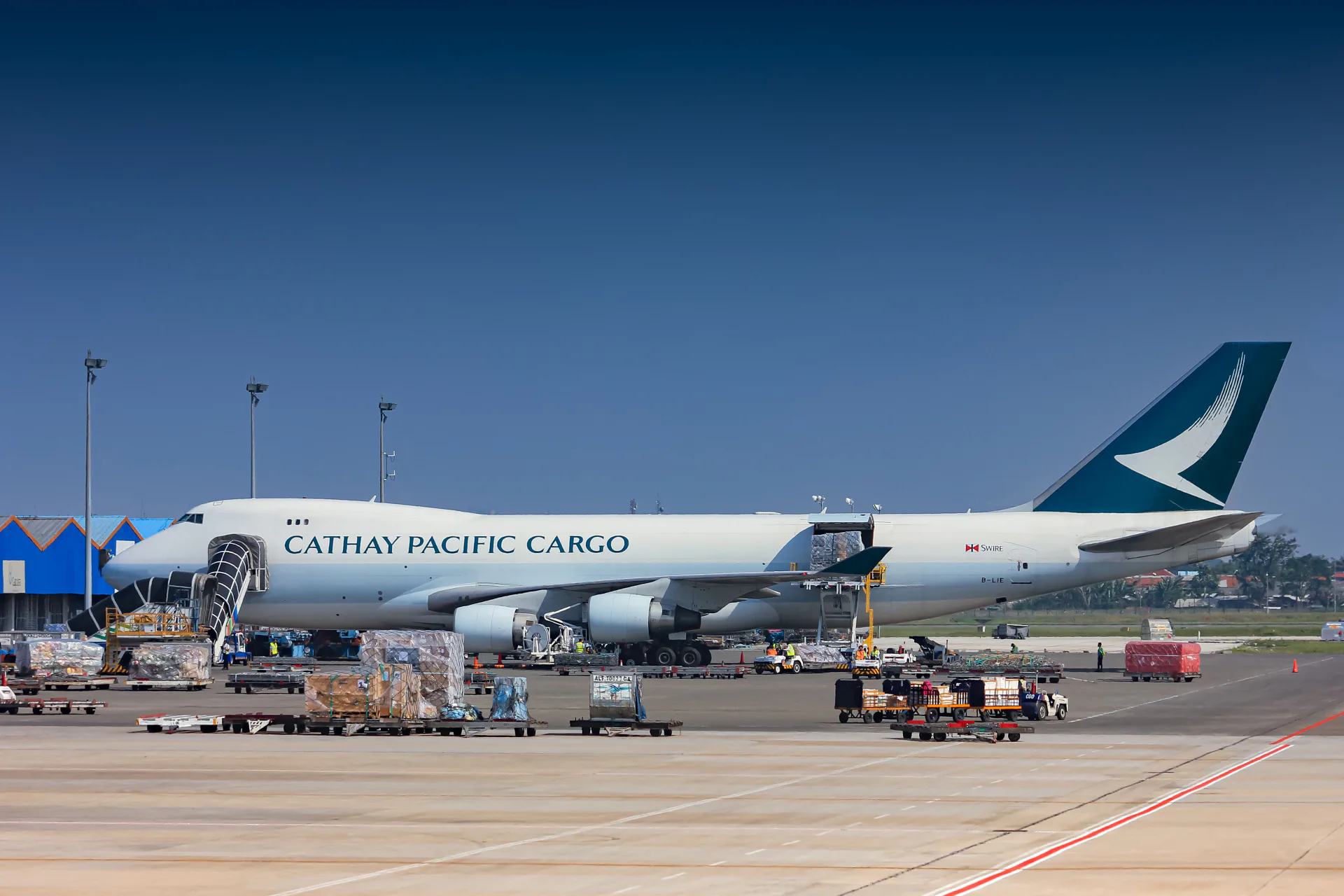
A freighter out of Shanghai reaches the US West Coast in around 12 hours and New York in 15 to 16. Yet a realistic air freight booking delivers in 5 to 8 days. The gap is the operating truth of air cargo: the sky costs hours, the ground costs days. Export screening, consolidation schedules, terminal handling, and customs each take their bite, which is why comparing "air vs ocean" on flight time alone misleads; the full mode comparison lives in our air vs ocean guide.
The door-to-door timeline, stage by stage
Where the days go on a standard China to US air shipment
| Stage | Typical time | What happens |
|---|---|---|
| Pickup and export | 1 to 2 days | Factory collection, export formalities, security screening |
| Consolidation and uplift | 1 to 2 days | Cargo waits for the booked flight or consol cutoff |
| Flight and connections | 1 to 2 days | 12 to 16 hours direct; add a day via a hub |
| Arrival and entry | About 1 day | Terminal breakdown, customs release |
| Final delivery | 1 to 2 days | Airport to door, local distance dependent |
The stage ceilings do not stack on one shipment; a normal booking hits one or two of them, not all five, which is how the maxima sum to nine while the standard band tops out at eight.
TAKEAWAY Two of the five stages respond to planning. Pre-arrival customs filing routinely turns "arrival and entry" into hours, and hitting the consolidation cutoff instead of missing it by an afternoon saves a full cycle. The tier decides the rest.
Lane by lane: Asia and Europe to the US
Door-to-door air transit to the US, 2026
| Origin | Express | Standard | Deferred |
|---|---|---|---|
| China (Shanghai, Shenzhen, Hong Kong) | ~3 days | 5 to 8 days | 8 to 10 days |
| Vietnam (Hanoi, Ho Chi Minh City) | 3 to 4 days | 5 to 9 days | 9 to 11 days |
| India (Delhi, Mumbai) | 3 to 4 days | 6 to 9 days | 9 to 11 days |
| Europe (Frankfurt, Amsterdam) | 2 to 3 days | 4 to 6 days | 7 to 8 days |
We review these tables quarterly against live schedules; confirm the numbers against a live quote when you book. Vietnam and India lean on hub connections more often than the China gateways, which is where their extra day usually comes from, and Europe's shorter sector plus dense schedules make it the steadiest lane on the board.
Express, standard, or deferred: the tier sets the clock
The tier you buy is mostly a queueing priority, and each tier has a distinct rhythm worth knowing before you pick one.
Express: the next uplift, both ends prioritized
Express cargo rides the next available flight with priority build-up at origin and priority breakdown at destination, which is where the 3-day door-to-door number comes from. It skips the consolidation wait entirely; you are paying for a queue position more than for a faster aircraft.
Standard: the consolidation schedule is the clock
Standard air moves on the forwarder's booked flights and consol schedule, weekly or better per gateway on the main lanes. Your transit is the cutoff you catch plus the schedule you ride, so two shipments booked a day apart can arrive four days apart if one made the Thursday consol and one waited for Monday's.
Deferred: one to three days sold back
Deferred products wait for space instead of reserving it, trading one to three days for a visibly lower rate; the pricing side of that trade sits in the air freight cost guide. It suits replenishment with slack, and it is the wrong product for anything with a date on it.
Geography sets the floor; the tier sets everything above it, so a deferred Shanghai shipment and an express Mumbai one can arrive the same week.
What adds days when it slips
Five delays account for most missed air ETAs, and each has a typical day cost worth budgeting.
Screening holds at origin: half a day to two days
Dense mixed pallets and anything X-ray-opaque get pulled for secondary screening. The hold itself is hours; missing the booked uplift because of it is what costs the day or two.
Batteries and DG surfacing late: two days to a week
Lithium batteries or dangerous goods discovered at the screening point force re-documentation, certified packing checks, and often a different flight that accepts the class. Declared at quote stage, the same cargo costs nothing extra in time.
A missed hub connection: one day, sometimes two
Cargo routed through a hub waits for the next rotation when a connection slips. Direct freighter routings avoid the risk entirely, which is part of what the better rate on a connecting routing is discounting.
Peak-season rolling: one to three days in Q4
When demand outruns capacity, booked cargo rolls to later flights in priority order, and October is the classic month. Confirmed space and earlier cutoffs are the defense; spot bookings roll first.
A CBP exam on arrival: two days to a week, plus fees
A CBP exam adds days and handling charges regardless of how fast the freight flew, and it is the one delay the airline cannot see coming. Clean, consistent documents are the only lever that lowers its odds.
None of these are exotic; a transit plan that has no room for any of them is a hope, not a plan.
Cutting 1 to 2 days off the standard timeline
The levers are unglamorous. Book against the published consolidation cutoff, not "sometime this week". Declare batteries and special cargo at quote stage so documentation is ready before screening asks. File entry data early enough for pre-arrival clearance. And pick the tier for the deadline rather than paying express rates on cargo that had ten days of slack, or deferred rates on a shipment that had three. When a stockout is driving the clock, the ocean-to-air restock playbook covers what should fly at all.
How Platton keeps air days honest
Transit misses in air freight are usually process misses, so the process is where the days get protected.
Scheduled consolidations, published cutoffs
Our air freight consolidations out of the Asian gateways run on a published schedule, so suppliers pack against a real cutoff instead of an estimate, and a missed afternoon does not silently become a missed week.
Entry filed while the freight flies
Documents are complete before departure and the entry goes through licensed customs brokers for pre-arrival clearance, which is how "arrival and entry" becomes the shortest line in the table instead of the longest.
The commitment is door-to-door
Platton quotes transit as door-to-door days for your lane and tier, not wheels-up hours, and tracking shows the shipment against that commitment stage by stage.
Get a door-to-door transit commitment for your lane
Common Questions About Air Freight Transit
What is the fastest way to ship from China to the US?
Express air service, about 3 days door to door, with integrator couriers competing at the same speed for smaller shipments. Beyond that only hand-carry beats it, at hand-carry prices. If three days still is not fast enough, the real problem is usually the reorder point, not the freight.
How long is the actual flight from China to the US?
Around 12 hours to the West Coast and 15 to 16 to the East Coast for a nonstop freighter, plus a day when the routing connects through a hub. The flight is the most reliable stage of the whole journey; almost all transit variance lives on the ground at either end.
Why is my air shipment from China taking so long?
Check five usual suspects in order: a missed consolidation cutoff at origin, a security screening hold, battery or DG paperwork surfacing late, a missed hub connection, or a customs exam on arrival. Peak season adds a sixth, cargo rolling to later flights. Each has a different fix, so start by locating the delay, not by chasing the airline.
How long does air freight take from Vietnam, India, or Europe?
Door to door in 2026: Vietnam and India run 5 to 9 and 6 to 9 days standard respectively, usually a touch behind China because more routings connect through hubs. Europe runs 4 to 6 days standard, the steadiest lane into the US. Express from any of them lands in 2 to 4 days.
Does air cargo fly direct from China to the US?
Often, but not by default. Freighters run nonstop from the main China gateways to the US hubs, while plenty of cargo routes through connections when direct space is tight or the price is better. Direct saves roughly a day; whether your shipment gets it depends on the booking, not the origin.
How can I shorten my air freight transit time?
In order of cheapness: hit the consolidation cutoff, declare special cargo early, enable pre-arrival clearance, then upgrade the tier. The first three are free and commonly recover one to two days; the tier upgrade buys the rest at express pricing. Chronic lateness on a lane is a schedule mismatch, not bad luck, and re-timing the weekly booking usually cures it.
Related Air Freight Guides
Air freight cost: what the tiers on this page cost per kilogram.
Air vs ocean freight: whether the week you are buying matters enough to pay for.
Ocean to air restock: using these transit times to save a season.
Ocean transit times, China to US: the slower clock on the same lanes.

